Published November 5, 2026
What Ridgewood Homeowners Should Know Before Hiring a Chimney Cleaner
Cleaning the fireplace grate and wiping down the hearth are useful household tasks, but they do not replace professional chimney maintenance. Soot, creosote, and debris can accumulate inside the flue, smoke chamber, and other parts of the chimney that are difficult to inspect from the firebox.
For Ridgewood homeowners, understanding the difference between basic fireplace maintenance and professional chimney cleaning can help prevent problems. This guide explains what you can safely handle yourself, what requires a qualified chimney professional, and how to compare chimney cleaning companies in Ridgewood and throughout Bergen County.
What You Can Safely Do Yourself
Homeowners can handle several basic fireplace maintenance tasks without taking apart the chimney or climbing onto the roof.
These include:
-
Removing cooled ash from the firebox when appropriate.
-
Cleaning fireplace glass according to the appliance manufacturer’s instructions.
-
Keeping the hearth and surrounding area free of debris.
-
Checking that the damper operates properly when the fireplace is cool.
-
Looking for visible cracks, loose masonry, or signs of water damage around the fireplace.
-
Checking the area around the fireplace for unusual odors or signs of smoke leakage.
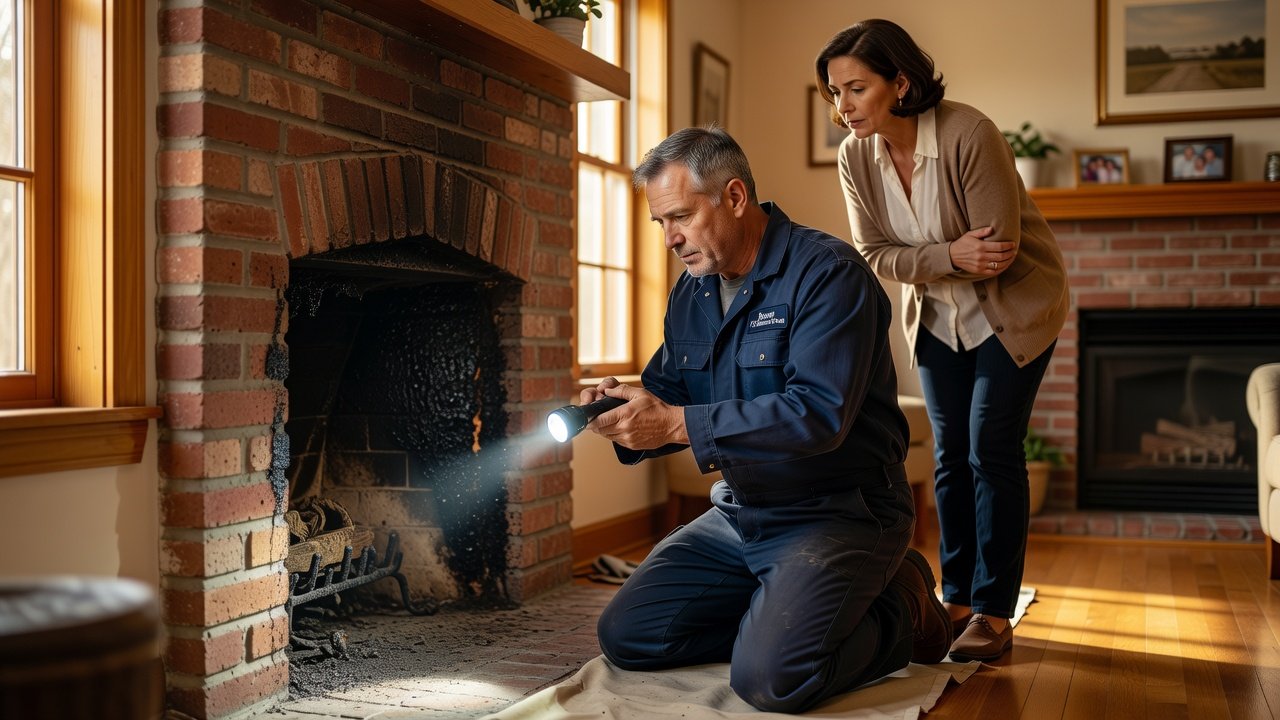
You can also use a flashlight to look inside the firebox for obvious problems, such as fallen mortar, visible obstructions, or heavy deposits. However, a view from the fireplace opening cannot establish the condition of the entire flue or chimney.
Avoid climbing onto the roof, dismantling chimney components, or attempting to remove hardened creosote yourself. These tasks require appropriate equipment and knowledge of chimney construction.
The National Fire Protection Association’s Standard 211 recommends that chimneys, fireplaces, and vents be inspected at least once a year. Cleaning, maintenance, and repairs should be performed when necessary. A professional inspection can identify conditions that are not visible during routine household cleaning.
Understanding Creosote and Why Professional Cleaning Matters
Creosote is a combustible deposit that forms when wood smoke cools and condenses inside a chimney. Its appearance and consistency can vary. Some deposits are flaky and relatively easy to remove, while others become sticky, hard, or glazed.
The amount of buildup depends on factors such as wood moisture, airflow, appliance operation, and burning habits.
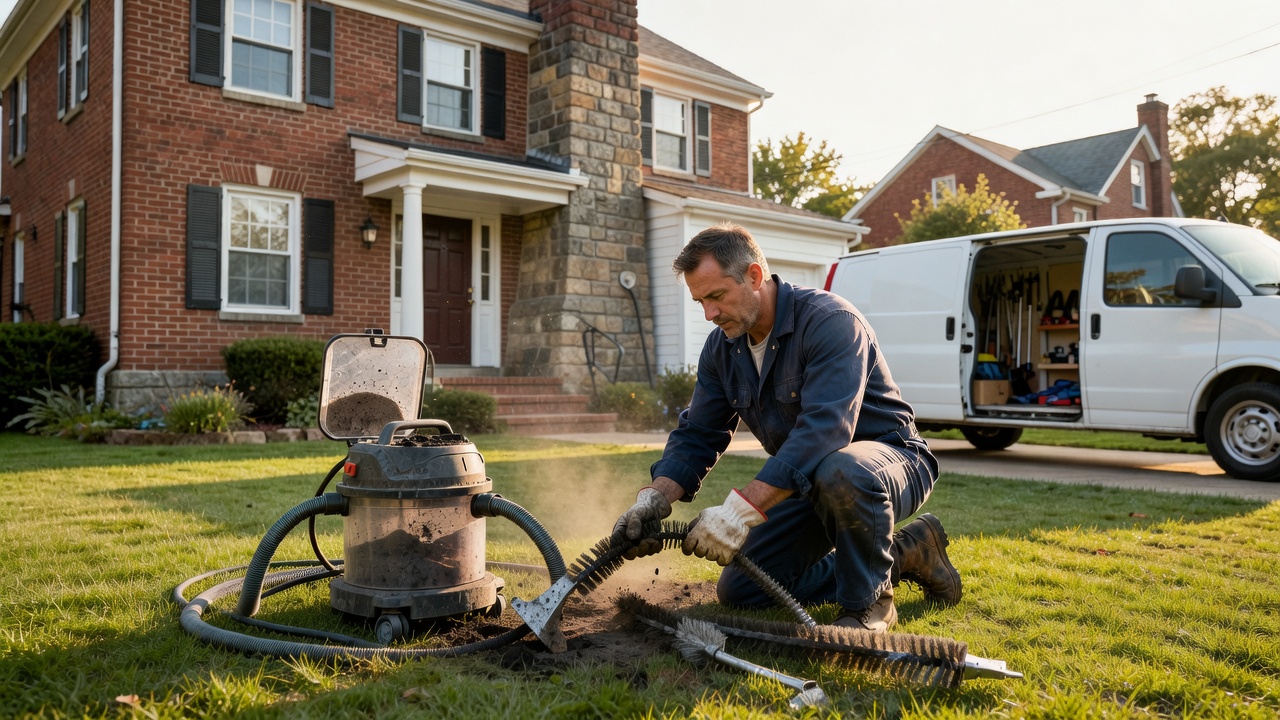
Standard chimney brushes and suitable vacuum equipment can remove ordinary soot and creosote deposits. Hard or glazed deposits may require specialized cleaning methods.
The Chimney Safety Institute of America (CSIA) explains that standard brushing has limited effectiveness against some glazed deposits. Professional sweeps may use specialized mechanical equipment or appropriate chemical treatments to make certain deposits easier to remove.
Attempting to remove hardened deposits with unsuitable tools can damage chimney components or leave combustible material behind. A qualified professional should determine the appropriate cleaning method after examining the chimney.
Credentials to Look for When Hiring a Chimney Cleaner
Before hiring a company for chimney cleaning in Ridgewood, check the qualifications of the person who will perform the work.
Two industry credentials worth considering are:
CSIA Certified Chimney Sweep (CCS)
The Chimney Safety Institute of America offers the Certified Chimney Sweep credential. Certification involves an examination covering chimney systems, safety, and industry practices. Homeowners can ask for the technician’s certification details and verify the credential through the CSIA website.
National Fireplace Institute (NFI) Certification
NFI certification may be relevant when a contractor also installs, services, or troubleshoots hearth appliances such as gas fireplaces, wood-burning appliances, and pellet appliances. Look for a certification that matches the type of equipment involved.
Membership in the National Chimney Sweep Guild (NCSG) can also indicate professional involvement in the chimney industry. However, membership is not the same as an individual certification.
These credentials can help you evaluate a contractor, but they should be considered alongside insurance, experience, inspection procedures, and written documentation.
Questions to Ask Before You Book
Before scheduling a chimney cleaning, ask the company a few practical questions. Clear answers can help you understand what the service includes and avoid confusion about additional charges.
Is the technician currently CSIA certified?
Ask for the technician’s name and certification information. You can check the credential through CSIA’s online directory.
Will I receive a written inspection report?
Ask whether the company provides a written record of the inspection. It should identify the inspection level, components examined, visible deficiencies, and any recommended follow-up work. Photographs can make the findings easier to understand.
What inspection level do you recommend?
NFPA 211 recognizes three inspection levels.
-
Level 1: Generally appropriate when the chimney and connected appliance have not changed and are being used under normal conditions. It covers readily accessible portions of the system.
-
Level 2: A more detailed inspection that includes additional accessible areas and an internal examination of the flue. It is commonly recommended after changes to the appliance or fuel type, suspected damage, a chimney fire, or a real estate transaction.
-
Level 3: Involves additional investigation when a suspected hazard cannot be adequately evaluated through a Level 1 or Level 2 inspection. It may require removing or opening building components to access concealed areas.
A camera examination is part of a Level 2 inspection, but homeowners should not assume every routine cleaning automatically requires one. The appropriate level depends on the chimney’s history and circumstances.
Does the company carry appropriate insurance?
Ask for current general liability insurance documentation. If employees or subcontractors will perform the work, ask how workers’ compensation coverage applies to the people working at your property.
Do not rely solely on a verbal assurance that the company is insured.
How will the company protect my home during cleaning?
A professional cleaning process should include suitable dust containment and cleanup procedures. Ask whether the crew uses drop cloths, appropriate vacuum equipment, and other measures to prevent soot and debris from spreading through the home.
Will I receive a written estimate before additional work begins?
If the technician finds damage or recommends repairs, request a written estimate explaining the condition, proposed work, materials, and price. You should have an opportunity to review the recommendation before authorizing additional work.
Red Flags to Watch for When Hiring a Chimney Cleaner
Not every contractor offering a low price or approaching homeowners is dishonest. However, certain practices deserve caution.
Be careful when a company:
-
Arrives without an appointment and pressures you to book immediately.
-
Claims to have discovered serious chimney damage without showing evidence.
-
Offers an unusually low cleaning price but cannot explain what is included.
-
Recommends expensive repairs without photographs or a clear written explanation.
-
Refuses to provide insurance documentation or business details.
-
Demands immediate payment or a large deposit before explaining the work.
-
Cannot provide a written estimate or service agreement.
New Jersey consumer protection guidance advises homeowners to be cautious about unsolicited home improvement offers, obtain written agreements, and check a contractor’s registration and complaint history when applicable.
If a contractor recommends a major repair during a routine cleaning, consider getting a second opinion before committing. A legitimate professional should be able to explain the problem and provide documentation without pressuring you.
How to Compare Chimney Cleaning Quotes
Chimney cleaning prices in Ridgewood can vary based on the fireplace type, chimney height, accessibility, buildup, and inspection requirements. A service involving heavy creosote deposits or additional inspection work may cost more than routine cleaning.
Rather than relying on a general price range, request estimates from at least two qualified companies. Make sure each quote covers comparable work.
Ask whether the estimate includes:
-
Cleaning the flue and accessible fireplace components.
-
A Level 1 inspection or another specified inspection level.
-
Dust containment and cleanup.
-
A written inspection report.
-
Additional charges for heavy or glazed creosote.
-
Any recommended repairs or replacement work.
A lower quote may exclude services that another company includes. Compare the scope, not just the final number.
A trustworthy contractor should explain which issues need attention now, which can be monitored, and which recommendations are optional. You should never feel pressured to approve unnecessary work.
Schedule Chimney Cleaning in Ridgewood, NJ
Regular inspections and appropriate cleaning help homeowners identify creosote buildup, obstructions, and chimney deterioration. Choosing a qualified chimney cleaner means checking credentials, insurance, inspection procedures, and written estimates before approving the work.
Ridgewood Chimney serves Ridgewood and surrounding Bergen County communities, including Glen Rock, Ho-Ho-Kus, Wyckoff, Waldwick, and Mahwah. Contact the company to ask about its chimney cleaning and inspection services, current availability, and pricing.
Contact Ridgewood Chimney to request an appointment and discuss the condition of your chimney before the heating season.
Serving your area: For related services in nearby communities, see Chimney Hackensack NJ and Evergreen Chimney Woodbury NJ.
Related from Ridgewood Chimney: What Glen Rock Homeowners Should Actually Know Before Hiring a Chimney · Chimney Repair in Ridgewood, NJ · Chimney Sweep Cleaning Repair Ridgewood NJ in Glen Rock
Our services
Chimney Repair in Fair Lawn · Chimney Repair in Ridgewood, NJ · Chimney Repair in Ridgewood · Chimney Repair in Ridgewood, NJ · Chimney Repair in Ridgewood, NJ · Chimney Repair in Ridgewood, NJ
Areas we serve
Ridgewood, NJ · Ridgewood, NJ · Ridgewood, NJ · Ridgewood, NJ · Paramus, NJ · Ridgewood, NJ · Ridgewood, NJ · All areas →