
Creosote Removal in Ridgewood, NJ
Creosote removal is the professional cleaning process that strips flammable, tar-like deposits from the interior walls of your chimney flue deposits that are the leading cause of residential chimney fires in the United States. Left untreated, creosote buildup restricts airflow, produces toxic fumes, and can ignite at temperatures above 1,100 °F, turning a cozy Bergen County winter evening into a life-threatening emergency. If you have a wood-burning fireplace, stove, or insert in your Ridgewood home, professional creosote removal is not optional it is essential preventive maintenance.
Who Needs Creosote Removal?
Any Ridgewood homeowner who burns wood even occasionally is accumulating creosote. It forms every single time combustion gases cool inside the flue before fully exiting the chimney. Certain conditions accelerate buildup dramatically:
- Burning unseasoned or “green” wood with moisture content above 20 percent
- Running low, smoldering fires rather than hot, efficient burns
- Oversized flues that cool gases too quickly
- Older Ridgewood homes with unlined or deteriorating terra-cotta tile flues
- Infrequent chimney cleaning the National Fire Protection Association (NFPA 211) recommends annual inspection and cleaning
If you have not had your chimney professionally inspected this season, or if you notice a strong tar or campfire smell inside your home, black oily residue near the firebox, or reduced draw, schedule service now. These are warning signs that creosote has progressed beyond Stage 1 and requires immediate attention.
Understanding the Three Stages of Creosote
Not all creosote is the same. Professional technicians assess which stage is present because each requires a different removal approach:
- Stage 1 – Flaky Soot Deposits: Light, dusty, and relatively easy to brush away during a standard chimney sweep. Caught early, removal is straightforward and affordable.
- Stage 2 – Crunchy, Tar-Like Buildup: Harder, shiny deposits that have begun to harden. Standard brushing alone is insufficient; rotary power cleaning systems are required to break the material free from flue tiles.
- Stage 3 – Glazed, Honeycomb Creosote: Dense, tar-saturated deposits that have hardened like a glaze throughout the flue. This is the most dangerous and most difficult to remove. It often requires chemical treatments, specialized rotary tools, and multiple service visits. In severe cases, the integrity of the flue liner itself must be evaluated before the fireplace can be safely used again.
Identifying the stage correctly on the first visit is critical it determines the tools used, the time required, and whether follow-up treatment is needed. Ridgewood Chimney technicians perform a thorough visual and camera inspection before any cleaning begins so you receive an honest, accurate assessment rather than a generic estimate.
Our Creosote Removal Process
We follow a methodical, safety-first process developed through years of servicing wood-burning fireplaces and stoves throughout Ridgewood and the surrounding Bergen County communities.
Step 1 — Pre-Service Inspection
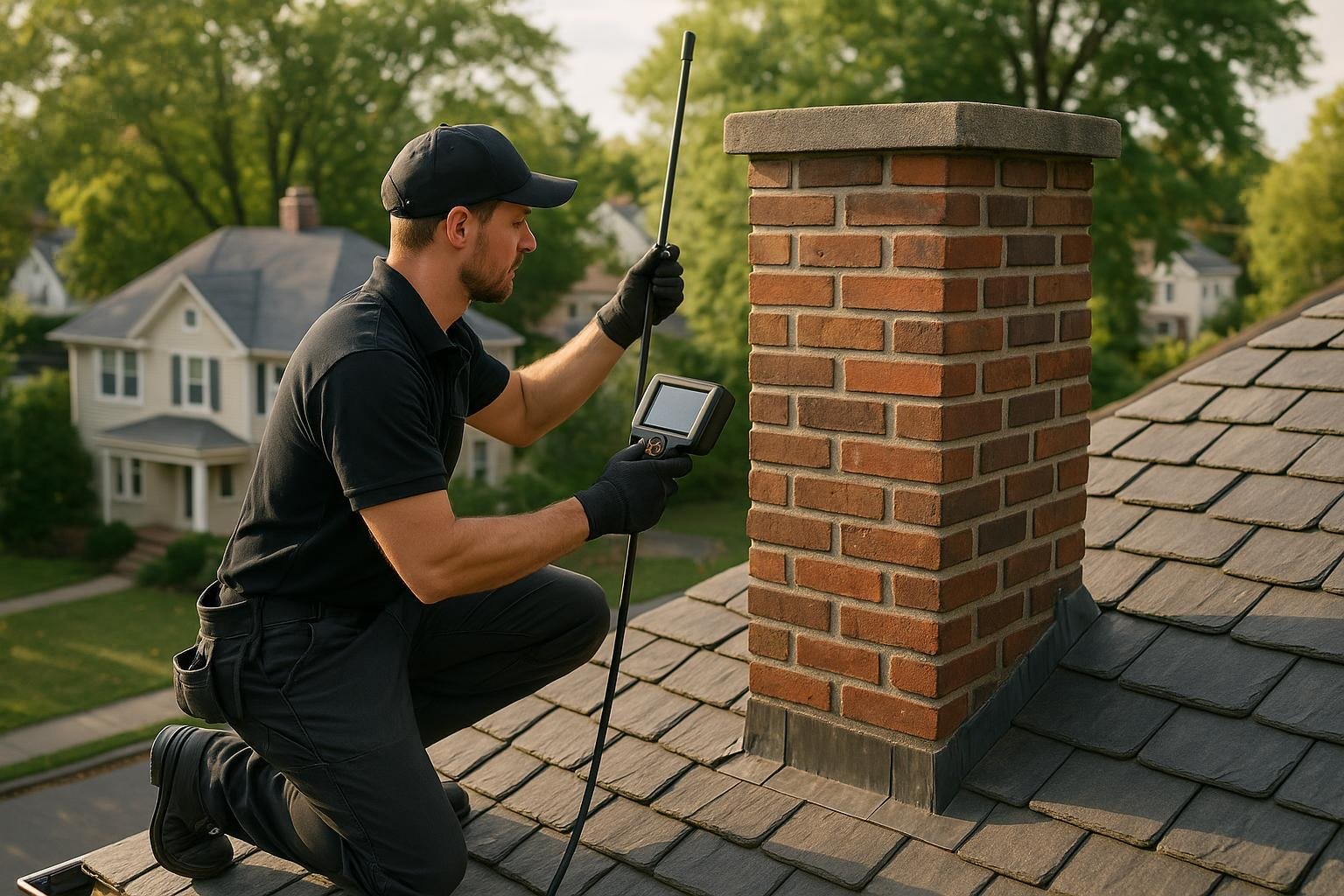
Before any tools enter your flue, our technician inspects the firebox, smoke chamber, damper, and flue liner. We use a camera system when visibility requires it. This step confirms the creosote stage and identifies any structural issues — cracked tiles, deteriorated mortar joints, or animal obstructions that must be addressed alongside the cleaning.
Step 2 — Protection of Your Home
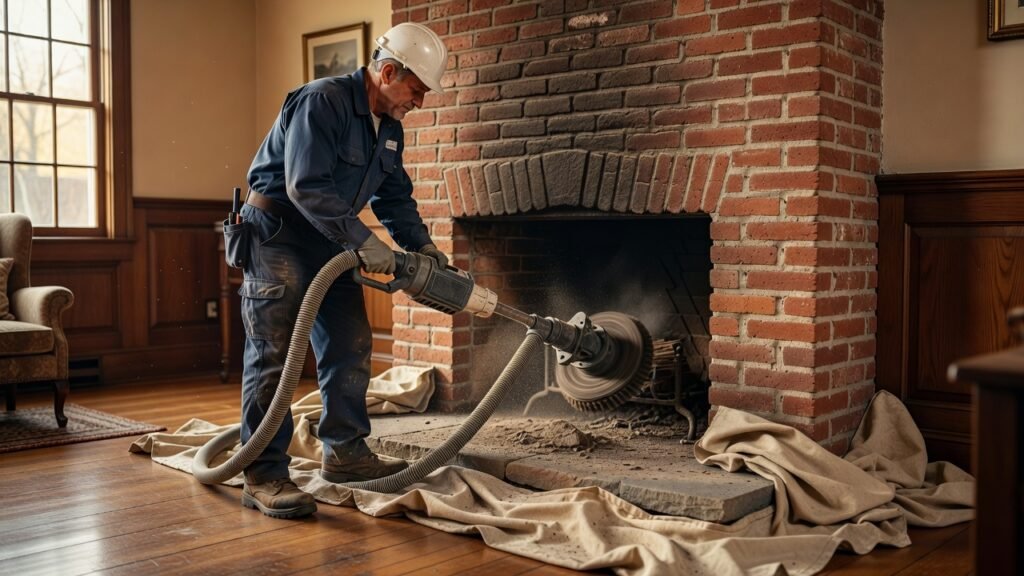
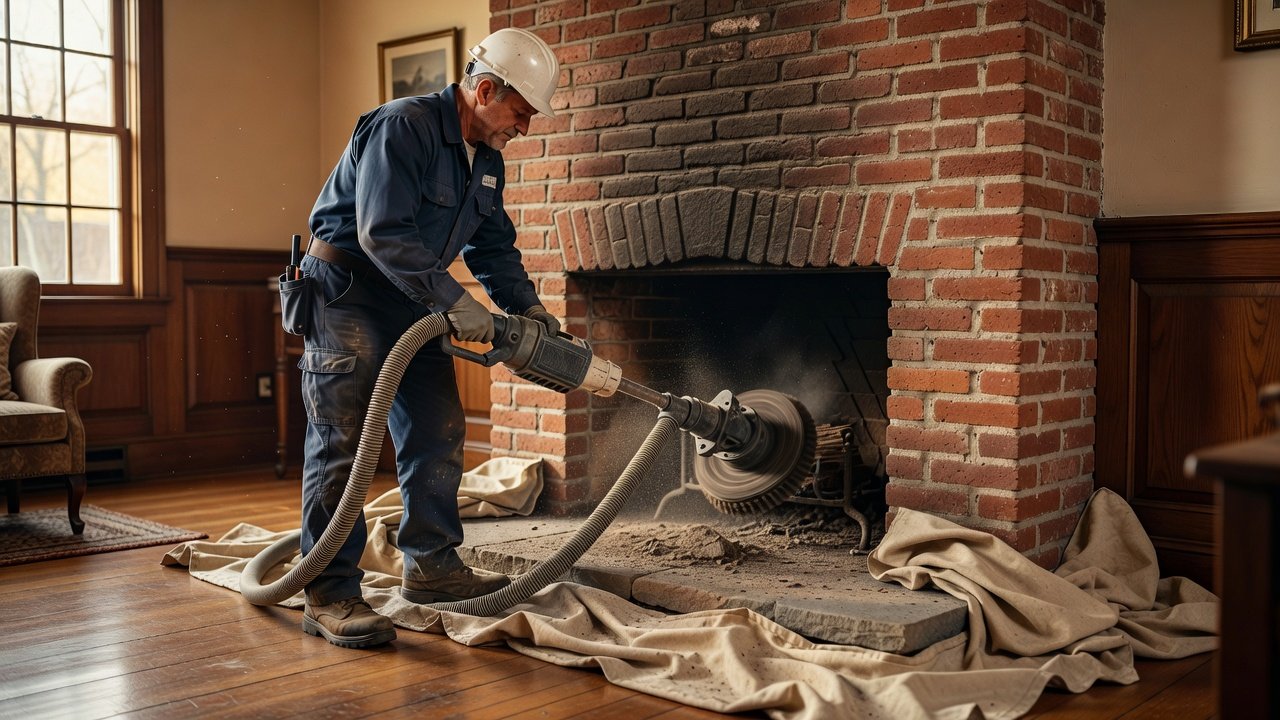
We lay heavy-duty drop cloths across your hearth, floor, and surrounding furniture. A high-efficiency HEPA vacuum system is connected to the fireplace opening before cleaning begins, creating negative pressure inside the firebox so soot and debris flow into our filtration equipment rather than into your living room. Ridgewood homes particularly the older Colonials and Tudors common throughout the Van Dien Avenue corridor often have formal living rooms adjacent to their fireplaces, and we treat your interior accordingly.
Step 3 — Mechanical Removal
For Stage 1 deposits, industry-standard chimney brushes sized precisely to your flue dimensions remove buildup from liner to firebox. For Stage 2 and Stage 3 deposits, we deploy rotary power-cleaning systems with carbide-tipped heads that abrade and fracture hardened creosote from the flue walls without damaging sound clay tile or stainless steel liners.
Step 4 — Chemical Treatment (When Indicated)
Stage 3 glazed creosote frequently requires a chemical treatment a dry powder or liquid formula applied directly to the deposits which converts the glazed material into a more brittle, removable form. A follow-up mechanical cleaning is then scheduled once the treatment has had time to work. We explain this process clearly upfront, so you understand exactly what is happening and why.
Step 5 — Post-Cleaning Inspection and Report
After cleaning, we reinspect the flue and firebox, document our findings, and present you with a written service summary. If we identify cracks, spalling tiles, or mortar deterioration that require repair, we show you the evidence directly photographs when applicable and provide a clear, no-pressure estimate. You are never sold repairs you do not need.
What Is Included in Every Creosote Removal Service
- Full pre-cleaning visual inspection of firebox, smoke chamber, damper, and accessible flue
- Complete interior protection with drop cloths and HEPA vacuum containment
- Mechanical brushing with correctly sized chimney brushes
- Rotary power cleaning for Stage 2 and Stage 3 deposits
- Debris and soot removal and cleanup
- Post-cleaning inspection with written service summary
- Honest assessment of flue liner condition with photo documentation if anomalies are found
- Clear explanation of findings in plain language no technical jargon used to confuse or upsell
Why Ridgewood Homeowners Trust Us
Ridgewood Chimney serves Ridgewood and the broader Bergen County area with technicians who understand the specific housing stock, chimney styles, and seasonal burn patterns of this community. Bergen County’s cold, damp winters with temperatures regularly dropping below freezing from November through March mean residents burn more wood and accumulate creosote faster than homeowners in milder climates. We know this market because we live and work here.
We are familiar with the older Victorian and Tudor homes throughout the East Ridgewood Historic District, many of which have original masonry chimneys that have never been relined. These flues require particular care during creosote removal because aggressive tools can fracture already-fragile older tile. Our technicians are trained to recognize when a flue liner requires gentle technique rather than maximum mechanical force a distinction that matters enormously in a neighborhood with homes built in the 1920s and 1930s.
We carry full liability insurance and adhere to NFPA 211 standards. We do not subcontract our work. When you call Ridgewood Chimney, the technician who arrives at your door is our employee trained, accountable, and committed to leaving your home cleaner than we found it.
Frequently Asked Questions About Creosote Removal
How often does creosote removal need to be done?
The NFPA recommends at minimum one annual inspection and cleaning for any chimney in active use. However, if you burn wood frequently more than two or three fires per week during the heating season or if you burn lower-quality or unseasoned wood, you may need cleaning twice per season. The only reliable way to know is a professional inspection; creosote accumulates at different rates depending on your fireplace design, wood type, burn habits, and flue dimensions.
Is Stage 3 glazed creosote always removable, or does the chimney need to be rebuilt?
Stage 3 creosote is removable in the majority of cases, though it typically requires chemical treatment followed by mechanical cleaning and may need more than one service visit. In cases where the glazed creosote has caused significant heat damage to the flue liner cracked or collapsed tile sections liner repair or relining may be necessary before the fireplace can be used safely. We assess this honestly during our post-cleaning inspection and will never recommend relining unless our camera inspection clearly justifies it.
Can I use creosote-removal logs instead of professional cleaning?
Chimney cleaning logs (sometimes marketed as “creosote sweeping logs”) can reduce Stage 1 light deposits modestly and may help make Stage 2 deposits slightly more brittle ahead of a professional cleaning, but they are not a substitute for mechanical removal. They cannot address Stage 3 glazed creosote, they do not remove debris from the firebox or smoke shelf, they do not inspect the flue liner for cracks or blockages, and they do not meet NFPA 211 annual cleaning standards. Use them as a supplement between professional cleanings if you wish, but not as a replacement.
Schedule Your Creosote Removal Today
Do not wait for a chimney fire warning sign to act. Creosote buildup is a year-round accumulation problem with potentially catastrophic consequences, and the solution is straightforward, affordable, and available now. Ridgewood Chimney is ready to inspect your flue, remove creosote safely and thoroughly, and give you a clear picture of your chimney’s condition before you light your next fire.
Call Ridgewood Chimney today or use our online scheduler to book your creosote removal appointment. Serving Ridgewood, NJ and the surrounding Bergen County communities. Same-season appointments available. HEPA-clean service guaranteed.
Worth knowing
Bergen County winters are hard on masonry. Freeze–thaw cycles pry at every joint, and small cracks become expensive rebuilds when they are ignored. A yearly inspection is the cheap way to stay ahead of it.
Areas we serve
Ridgewood, NJ · Ridgewood, NJ · Ridgewood, NJ · Ridgewood, NJ · Ridgewood, NJ · All areas →