What Chimney Cleaning Actually Costs in Ridgewood and Paramus, NJ and Where Homeowners Go Wrong
Chimney cleaning costs can vary considerably depending on the chimney, the amount and type of deposits, the number of flues, accessibility, and whether the inspection identifies repairs that need attention.
For homeowners in Ridgewood and Paramus, the important question is not simply whether a chimney sweep is expensive or inexpensive. It is whether the quoted service includes the work your chimney actually needs. Understanding what affects the price can help you compare estimates and avoid paying for services you do not need.
Why Chimney Cleaning Prices Vary
There is no single price that applies to every chimney.
The condition of the chimney and the type of deposits inside the flue can affect the work required. CSIA guidance explains that cleaning frequency depends on factors such as how often the chimney is used, the installation, the fuel being burned, and burning habits.
For masonry fireplaces, CSIA recommends sweeping when soot buildup reaches about 1/8 inch and sooner when glaze is present. Hard or glazed deposits may require more specialized mechanical cleaning than ordinary soot or creosote.
Other factors that can affect the scope of work include:
Creosote and Other Deposits
Not every chimney contains the same type or amount of buildup.
Ordinary soot and creosote can often be removed with standard brushing. Hard or glazed deposits can require mechanical cleaning equipment and more specialized techniques. CSIA notes that chemical products may sometimes be used by professionals in conjunction with mechanical cleaning, but they should not be treated as a substitute for professional inspection and mechanical sweeping.
The original article described “stage one,” “stage two,” and “stage three” creosote as though NFPA 211 uses those categories to establish cleaning prices. That terminology and pricing structure should not be presented as an NFPA pricing standard.
Chimney Height and Accessibility
A chimney that is difficult to access can require more time and specialized equipment.
Roof configuration, chimney height, access to the flue, and the overall condition of the system can all affect the work involved. These factors should be reflected in the scope of the estimate rather than hidden in a vague additional charge.
Number of Flues
A home may have more than one fireplace or heating appliance connected to separate flues.
If multiple flues require inspection or cleaning, ask the company whether the quoted price covers one flue or the entire chimney system.
How Long It Has Been Since the Last Cleaning
There is no universal rule that says a chimney must be cleaned every year. CSIA and NFPA guidance distinguishes between annual inspection and cleaning when necessary. Cleaning frequency depends on use, fuel, installation, and the amount of deposits present.
If you cannot remember the last time the chimney was inspected or cleaned, tell the contractor. The condition of the system can then be evaluated before the work is performed.
Liner or Masonry Problems
Cleaning and repair are separate services.
An inspection may reveal cracked flue components, deteriorated masonry, damaged flashing, crown problems, or other conditions that require repair. Those costs should be clearly separated from the chimney cleaning charge.
Do not assume that a repair recommendation is part of the normal cleaning price. Ask the contractor to explain exactly what was found and why additional work is recommended.
Animals and Debris
Obstructions can also affect the work required.
CSIA notes that animals can enter chimneys and create obstructions, which is one reason annual inspection is recommended even when a fireplace has not been used recently.
If a chimney contains a nest, animal remains, leaves, or other debris, the contractor should explain what needs to be removed and whether additional work is necessary.
What a Standard Chimney Cleaning Should Include
A homeowner should understand the difference between inspection and cleaning.
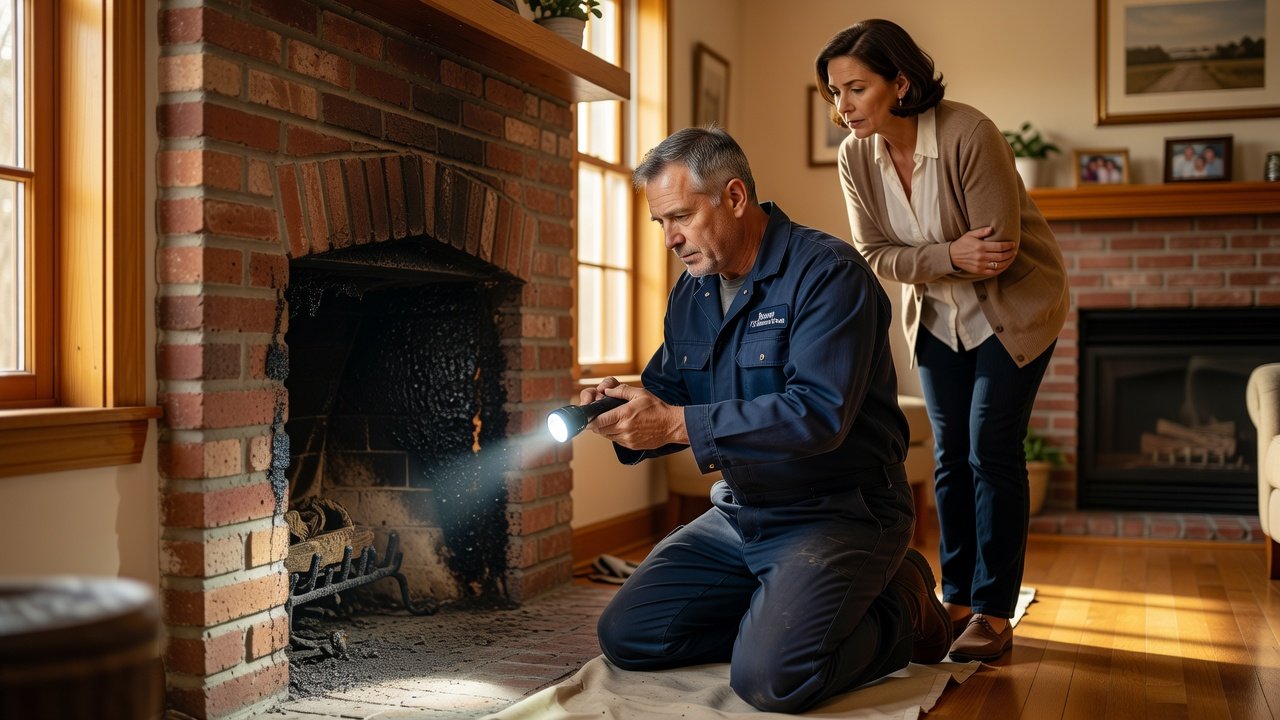
A routine Level 1 inspection is the inspection level CSIA identifies for routine chimney cleanings and annual inspections when nothing significant has changed. It involves evaluating readily accessible portions of the appliance and chimney, checking for blockages and deposits, and determining whether the system can continue to be used as it is.
If cleaning is necessary, the sweep should use an appropriate mechanical cleaning method for the chimney and deposits involved.
CSIA describes standard cleaning as brushing the chimney walls while using appropriate vacuum equipment to control soot and debris. Hard creosote or glaze may require more specialized mechanical cleaning.
Before booking, ask whether the quoted service includes:
- The inspection
- Mechanical chimney sweeping
- Removal of soot and loose debris
- Firebox or appliance-area cleanup
- Identification of visible problems
- A written report or service documentation
Then ask what is excluded.
Potential additional services can include:
- Level 2 inspection
- Hard or glazed creosote removal
- Chimney cap work
- Crown repair
- Masonry repair
- Flashing repair
- Damper repair or replacement
- Liner repair or replacement
- Animal or debris removal
A reputable contractor should be able to explain these distinctions before you authorize additional work.
Don’t Confuse Cleaning With a Level 2 Inspection
One of the most important distinctions for homeowners is the difference between a routine cleaning and a more extensive inspection.
A Level 1 inspection is generally appropriate for routine annual inspections and cleanings when the system is continuing to be used as it has been.
A Level 2 inspection is more extensive and may be appropriate when there has been a significant change to the chimney or appliance system, a property transaction, an operating problem, or another circumstance covered by the applicable inspection standard.
It should not be described as an automatic add-on for every cleaning.
If a contractor recommends Level 2, ask what circumstance triggered the recommendation and what additional areas or procedures are included.
Why Comparing Prices Can Be Misleading
A cheap chimney cleaning is not necessarily a good deal, but an expensive one is not automatically better.
The first question should be: Are the two companies quoting the same service?
For example, one company may quote a basic cleaning while another includes a more extensive inspection. Another company may have identified a difficult deposit or an accessibility issue that changes the scope.
Instead of comparing only the final number, compare:
- Inspection level
- Number of flues
- Cleaning method
- Deposit condition
- Access requirements
- Included cleanup
- Written documentation
- Additional services
- Repair recommendations
Ask each company to provide the scope in writing.
Be Careful With Extremely Specific Price Claims
The original version of this article listed fixed Bergen County prices for cleaning, Level 2 inspections, creosote removal, chimney caps, and relining.
Those figures should not be presented as established local market rates without current, reliable pricing data. Chimney service pricing changes over time and varies significantly according to the individual system.
A better approach is to ask for a written estimate that explains what the price covers.
If one company is substantially more expensive than another, ask why. If one is substantially cheaper, ask what is excluded.
That gives you a much better basis for comparison than a generic online price range.
How to Avoid Paying for Problems You Don’t Have
Homeowners can protect themselves by asking for documentation before approving significant repair work.
If a contractor identifies a damaged liner, masonry problem, cap issue, or other defect, ask:
- What exactly did you find?
- Where is it located?
- Can you show me a photograph?
- Is it a safety issue, maintenance issue, or repair recommendation?
- Does the chimney need to be taken out of service?
- What happens if I delay the repair?
- What will the repair include?
- Can I receive the recommendation in writing?
For expensive or extensive repairs, getting another qualified opinion can also help you compare recommendations.
Choose the Scope Before You Choose the Price
The best chimney cleaning quote is not necessarily the cheapest one.
A good estimate should make it clear whether you are paying for a routine cleaning, an inspection, or additional diagnostic or repair work. It should also identify circumstances that could change the price.
CSIA recommends annual inspection and cleaning when necessary, rather than treating every chimney as though it requires the same cleaning schedule or procedure.
If your Ridgewood or Paramus chimney has not been inspected recently, schedule an evaluation before using the fireplace regularly. Ask the contractor to explain what level of inspection is appropriate, whether cleaning is necessary, and whether any repairs need to be addressed.
Ridgewood Chimney serves homeowners throughout Bergen County, including Ridgewood, Paramus, Glen Rock, Ho-Ho-Kus, Waldwick, and surrounding communities. Contact us to discuss your chimney cleaning or inspection needs and receive a clear explanation of the recommended service.
Related from Ridgewood Chimney: How Much Does Chimney Cleaning Cost in Paramus and Ridgewood, NJ? · Chimney Sweep Cleaning Repair Ridgewood NJ in Glen Rock
Our services
Reliable Chimney Care in Mission Viejo · Reliable Chimney Care in Los Alamitos · Reliable Chimney Care in Lake Forest · Reliable Chimney Care in Laguna Woods · Reliable Chimney Care in Laguna Niguel · Reliable Chimney Care in Laguna Hills
Areas we serve
Ridgewood, NJ · Ridgewood, NJ · Ridgewood, NJ · Ridgewood, NJ · Paramus, NJ · Ridgewood, NJ · Ridgewood, NJ · All areas →