What Most Ridgewood Homeowners Get Wrong About Chimney Cleaning
Creosote doesn’t announce itself. It builds up quietly inside your flue throughout the heating season, and by spring, most homeowners have no idea how much has accumulated or whether it has created a serious problem. Many of the misconceptions about chimney cleaning sound reasonable at first, but they can lead homeowners to delay service until a preventable problem develops.
Here’s what Ridgewood homeowners should actually know about chimney cleaning, inspections, and the risks of waiting too long.
“My Fireplace Doesn’t Smoke, So the Chimney Must Be Fine”
This is one of the most dangerous assumptions a homeowner can make.
A chimney can have significant creosote buildup, debris, or structural damage while still drawing smoke properly. Good draft does not automatically mean the flue is clean or safe. It simply means combustion gases are moving through the chimney.
The concern is what those gases are moving past on their way out.
Stage two and stage three creosote can accumulate inside a flue without creating an obvious change in fireplace performance. A hot fire can ignite that buildup, creating a chimney fire that may reach extremely high temperatures. According to the Chimney Safety Institute of America, chimney fires can reach temperatures exceeding 2,000 degrees Fahrenheit.
That level of heat can damage clay flue liners. Once a liner is cracked or compromised, heat and combustion gases can reach areas of the chimney system that were never designed to withstand direct exposure.
Ridgewood, Glen Rock, and Wyckoff also have substantial amounts of older housing stock. Many homes built decades ago still have original chimney components that have experienced years of heat, moisture, and freeze-thaw cycles.
A fireplace that draws well can still have problems that are completely hidden from view.
“I Only Use the Fireplace a Few Times a Year, So Annual Cleaning Isn’t Necessary”
Another common assumption is that occasional use eliminates the need for regular inspection.
NFPA 211 calls for chimneys, fireplaces, and vents to be inspected at least annually, with cleaning performed when deposits or other conditions warrant it. The recommendation isn’t based solely on how many fires you burn.
A chimney can develop problems even when the fireplace isn’t being used.
An unused chimney remains exposed to weather and wildlife. Birds, squirrels, raccoons, and other animals can enter through an uncapped or damaged chimney opening. Water can penetrate deteriorated mortar joints, damaged crowns, or faulty flashing. Debris can accumulate inside the flue and restrict airflow.
Even a fireplace used only a few times during the winter produces combustion byproducts.
Seasoned firewood generally produces cleaner combustion than wet or unseasoned wood, but burning wood still creates creosote and other deposits. If you use the fireplace on Thanksgiving, Christmas, and several evenings during January, an annual inspection is still a sensible maintenance practice.
“A Chimney Sweep Just Runs a Brush Through and Calls It Done”
This misconception can lead homeowners to compare chimney companies based almost entirely on price.
A professional chimney service involves more than simply pushing a brush through the flue.
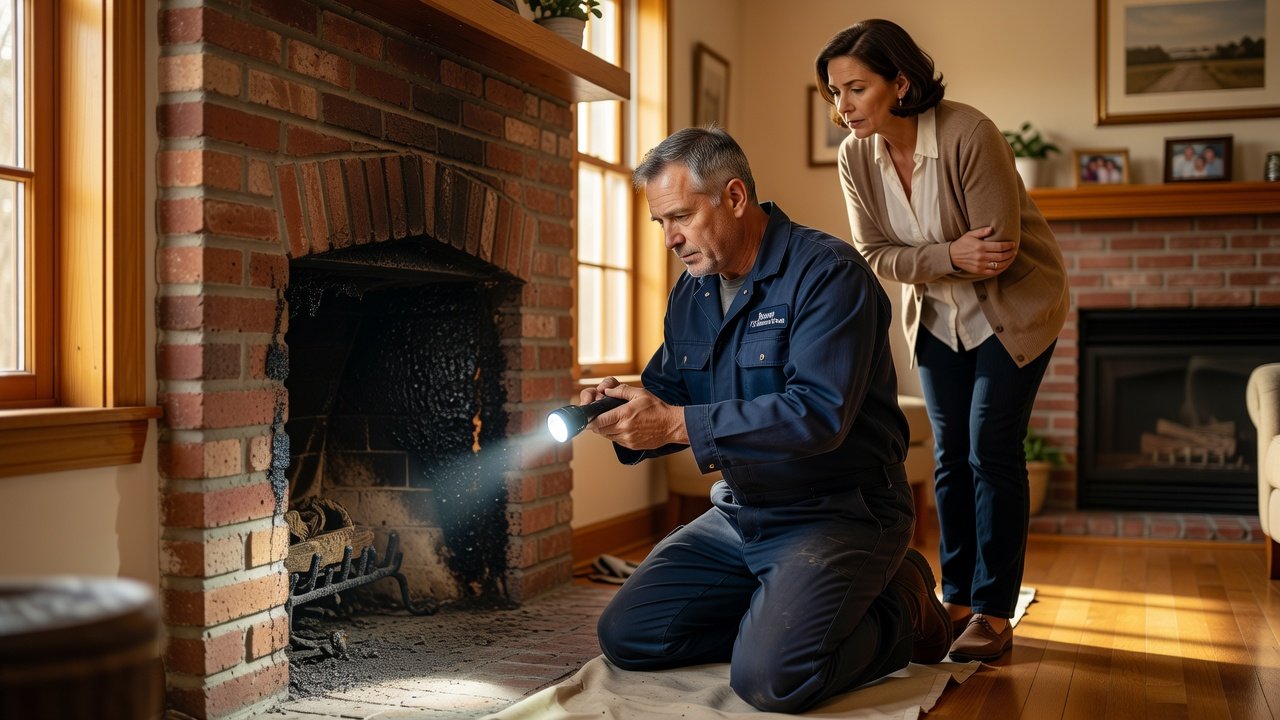
During a typical visit, the technician may evaluate the firebox, damper, smoke chamber, accessible portions of the flue, chimney crown, cap, and visible masonry. The technician is also looking for signs of creosote buildup, liner deterioration, water intrusion, blockages, and other conditions that could affect safe operation.
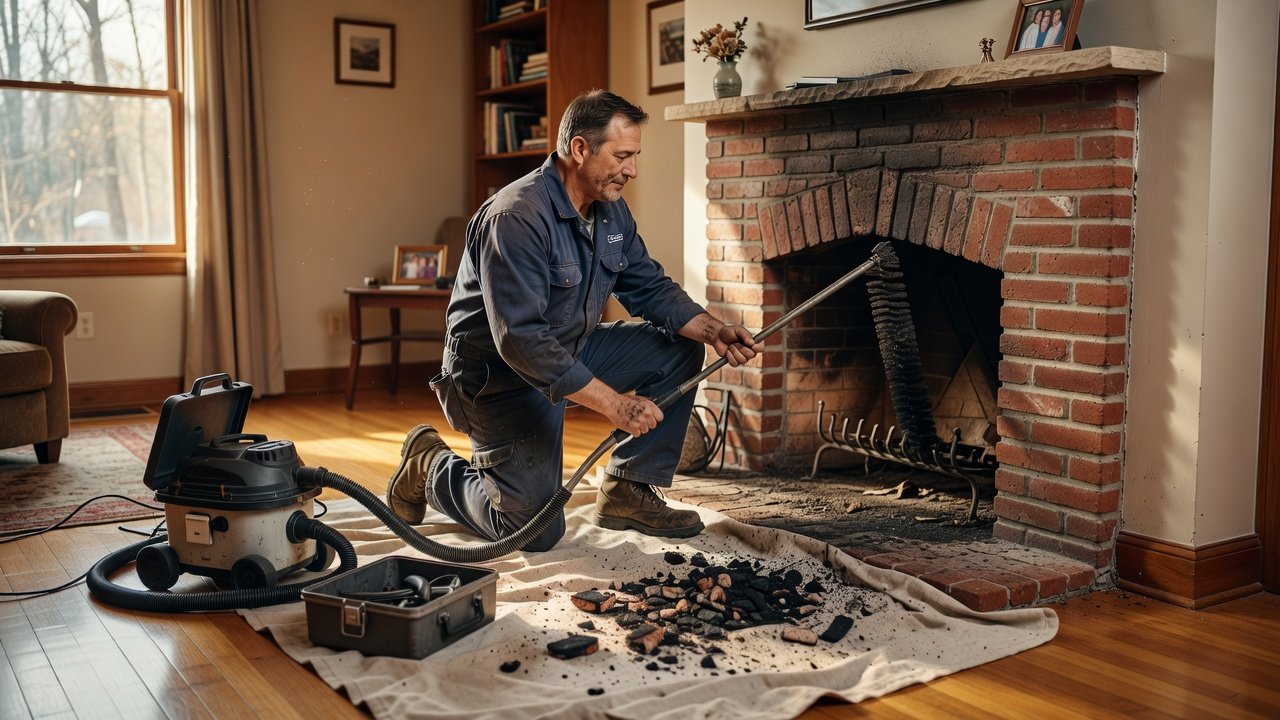
The cleaning itself may involve appropriately sized brushes, vacuum equipment, and additional methods when deposits are heavier than a standard brush can handle.
Inspection levels also matter.
A Level 1 inspection is generally the baseline inspection for a chimney system when there have been no known changes or unusual events. A Level 2 inspection is more comprehensive and includes video scanning of the flue when conditions call for it, such as a property transfer or changes to the appliance or venting system.
These inspection procedures aren’t simply additional sales opportunities. They are designed to identify problems that a basic visual check cannot reveal.
“Chimney Cleaning Is Expensive, So I’ll Wait Until There’s a Problem”
Cost is a legitimate consideration, but waiting for a problem isn’t necessarily a way to save money.
A standard chimney cleaning and basic inspection in Bergen County may typically cost around $150 to $300, depending on the chimney configuration, accessibility, and amount of buildup.
The cost can increase substantially when a neglected chimney develops a larger problem.
A damaged liner, for example, may require extensive repair or relining. Water intrusion can damage masonry and other chimney components. A chimney fire can create additional damage to the liner and surrounding structure.
The final cost can be much higher than routine maintenance.
Homeowners should also avoid assuming that insurance will automatically cover every chimney-related loss. Coverage depends on the individual policy and circumstances of the loss. Proper maintenance records can be important if a claim ever arises.
The better approach is to identify problems while they’re still manageable rather than waiting until the fireplace itself tells you something is wrong.
“Wood-Burning Inserts and Gas Fireplaces Don’t Need Cleaning”
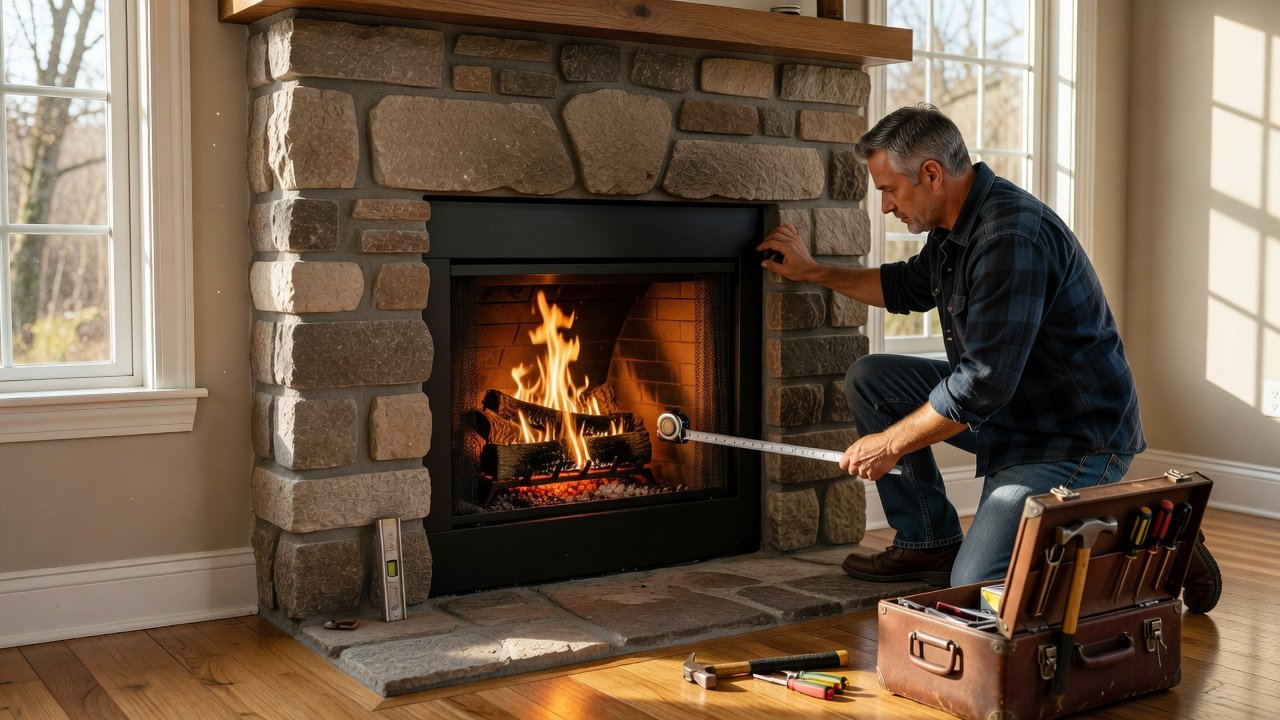
Different fireplace systems have different maintenance requirements, but switching from a traditional fireplace doesn’t eliminate the need for inspection.
Wood-burning inserts can produce significant creosote buildup because their operating conditions and venting configurations can differ from open masonry fireplaces. Even newer, more efficient appliances still require appropriate maintenance.
Gas fireplaces are different because they don’t produce the same creosote deposits associated with wood combustion. That doesn’t mean their venting systems can be ignored.
Gas appliances can still experience venting problems, blockages, deterioration, or other conditions that affect the safe movement of combustion gases.
For that reason, homeowners with gas fireplaces or inserts should follow the manufacturer’s maintenance requirements and applicable inspection recommendations.
A gas fireplace that hasn’t been evaluated for several years shouldn’t automatically be considered safe simply because there is no visible soot.
“I Can Tell If There’s a Problem Just by Looking”
A quick look inside the firebox can identify some obvious problems, but it cannot tell you everything about the chimney.
The majority of the flue is hidden inside the chimney structure. Homeowners generally cannot see the entire liner, smoke chamber, or exterior portions of the chimney from the fireplace opening.
Even creosote can be difficult to classify by appearance alone.
Light deposits may look similar to ordinary soot, while heavier deposits can become increasingly hardened or glazed. The more serious concern is that you cannot inspect portions of the flue that are completely out of sight.
That’s why a proper inspection matters.
A qualified chimney professional has the equipment and experience to evaluate areas that aren’t accessible through a simple flashlight inspection. When a Level 2 inspection is warranted, a video scan can provide a much clearer picture of the flue’s interior condition.
What Ridgewood Homeowners Should Do Before the Next Fire
The biggest mistake isn’t failing to recognize every chimney problem yourself. It’s assuming that no visible problem means there isn’t one.
If you use your fireplace regularly, follow an annual inspection schedule and have the chimney cleaned whenever the level of deposits warrants it. If you’ve recently purchased the home, changed the appliance, experienced a chimney fire, or don’t know when the system was last inspected, ask a qualified professional whether a more comprehensive inspection is appropriate.
For homeowners in Ridgewood, Glen Rock, Wyckoff, and surrounding Bergen County communities, a professional inspection can give you a clear picture of what’s actually happening inside the chimney before the next heating season gets underway.
Ridgewood Chimney serves homeowners throughout Bergen County with chimney inspections, cleaning, and related services. Contact us to schedule an inspection and find out what your chimney actually needs before you light the next fire.
Related from Ridgewood Chimney: Chimney Sweep Cleaning Repair Ridgewood NJ in Glen Rock · How Much Does Chimney Cleaning Cost in Paramus and Ridgewood, NJ? · Chimney Cap Installation in Ridgewood, NJ
Areas we serve
Ridgewood, NJ · Ridgewood, NJ · Ridgewood, NJ · Ridgewood, NJ · Paramus, NJ · Ridgewood, NJ · Ridgewood, NJ · All areas →