What a Chimney Sweep in Ridgewood, NJ Actually Costs and How to Make Sure You’re Getting It Right
Hiring a chimney sweep sounds straightforward until you receive several quotes that differ by hundreds of dollars. The difference is not necessarily a sign that one company is overcharging. Chimney cleaning prices can change depending on the condition of the chimney, the number of flues, accessibility, the type of deposits present, and whether additional inspection or repair work is needed.
For homeowners in Ridgewood, the better question is not simply, “What is the cheapest chimney sweep?” It is, “What exactly does each company include?” Understanding the scope of service makes it much easier to compare quotes and avoid unnecessary surprises.
Step 1: Know What a Chimney Sweep Actually Includes
The term “chimney sweep” can describe different services.
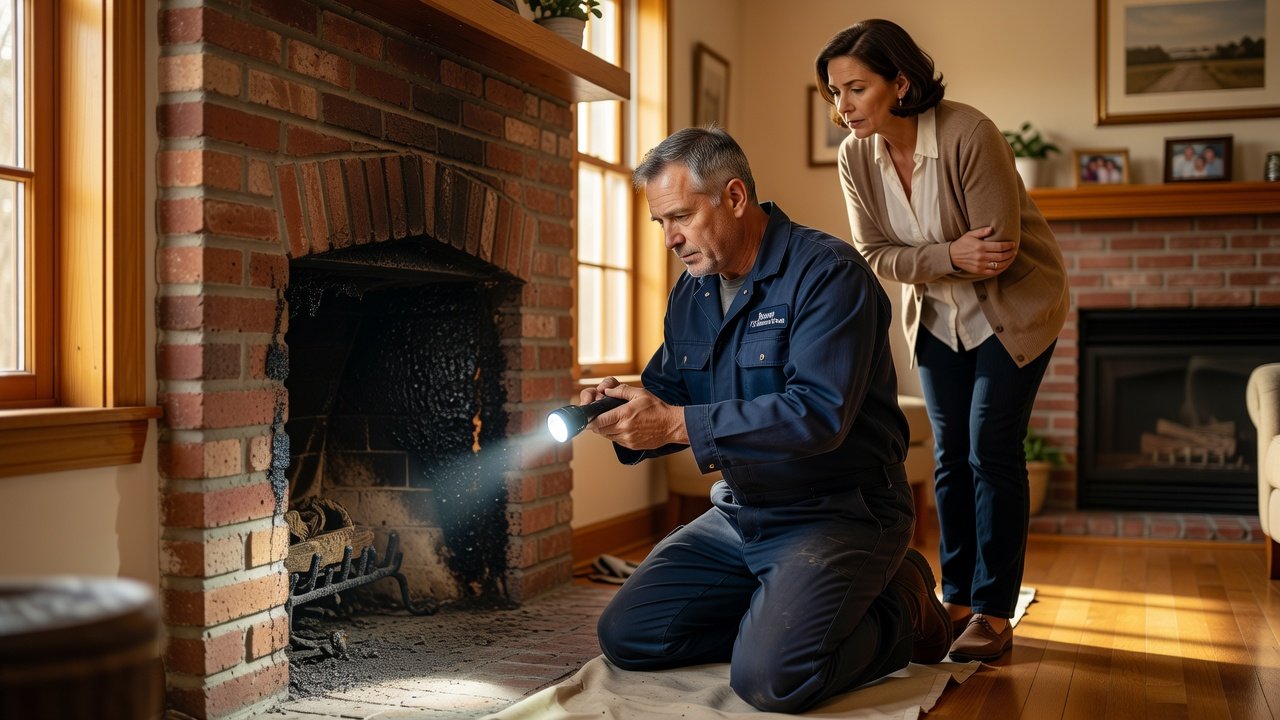
A routine chimney cleaning may involve mechanical sweeping of the flue and removal of soot, creosote, and debris. A chimney inspection is a separate part of the process, although an inspection may be performed as part of a cleaning visit.
CSIA recommends annual chimney inspections, with cleaning performed when necessary. For routine situations with no changes to the system, a Level 1 inspection is generally the appropriate inspection level. (csia.org)
A Level 1 inspection evaluates readily accessible portions of the chimney, fireplace or appliance, and chimney connection. It is intended to determine whether the system can continue to be used under the same conditions.
Ask before booking whether your quoted service includes:
- Mechanical chimney cleaning
- A Level 1 inspection
- Inspection of accessible components
- Removal of soot and debris
- Firebox or appliance-area cleanup
- Written service documentation
- Photographs when appropriate
The exact scope should be clear before the technician arrives.
Step 2: Don’t Assume Every Chimney Costs the Same
There is no single reliable “Ridgewood price” for chimney sweeping.
The cost can vary based on several factors.
Amount and Type of Creosote
The type and amount of deposits inside the chimney can affect the cleaning method.
Ordinary deposits may be handled with standard mechanical brushing. Hard, tacky, or glazed creosote can require more specialized cleaning methods.
CSIA explains that professional sweeps may use chemical products in conjunction with mechanical cleaning when heavy or difficult deposits are present. Chemical cleaning alone is not considered a substitute for professional mechanical sweeping and inspection. (csia.org)
CSIA also notes that burning green or wet wood and repeatedly allowing fires to smolder can contribute to heavier creosote accumulation. (csia.org)
The original article referred to “first-degree,” “second-degree,” and “third-degree” creosote as though these were NFPA 211 categories. That terminology should not be presented as an NFPA pricing or classification system.
Chimney Height and Accessibility
A chimney that is difficult to access may require additional time or equipment.
Roof configuration, chimney height, access to the flue, and the overall condition of the system can all affect the work involved. A good estimate should account for these factors rather than adding unexplained charges later.
Number of Flues
A home can have multiple fireplaces or heating appliances connected to separate flues.
If you have more than one flue, ask whether the quote covers one flue or all of them. This is especially important when comparing two companies whose estimates initially appear very different.
How Long It Has Been Since the Last Service
CSIA does not prescribe automatic annual sweeping for every chimney. Instead, it recommends annual inspection and cleaning when necessary. Cleaning frequency depends on factors including use, fuel, installation, and the amount of deposits present. (csia.org)
If you do not know when your chimney was last cleaned, tell the contractor. The inspection can help determine whether cleaning is necessary and what cleaning method is appropriate.
Additional Problems
Cleaning may uncover conditions that require separate work.
Examples include:
- Damaged or deteriorated flue components
- Chimney crown deterioration
- Damaged flashing
- Missing or damaged chimney caps
- Masonry deterioration
- Obstructions
- Damper problems
These should be identified separately from the cleaning charge.
Step 3: Understand When a Level 2 Inspection Is Appropriate
A Level 2 inspection is more extensive than a routine Level 1 inspection.
Under the current NFPA 211 inspection framework, Level 2 circumstances include situations such as adding or removing connected appliances, replacing an appliance with one of a different type or rating, relining or replacing a flue lining, selling or transferring the property, or after an operating malfunction or external event likely to have caused damage. (docinfofiles.nfpa.org)
A Level 2 inspection expands the inspection to accessible areas such as attics, crawl spaces, and basements and includes video scanning or another appropriate method for evaluating the interior of the flue.
The important point is that a Level 2 inspection should be based on the circumstances. It is not an automatic add-on to every chimney cleaning.
If a contractor recommends one, ask what condition or change triggered the recommendation and what additional work is included.
Step 4: Don’t Let an Advertised Price Make the Decision for You
You may encounter very low advertised chimney-cleaning prices online.
A low introductory price is not automatically fraudulent, but it also does not tell you what the final service will include.
Before booking, ask:
- Is the price for cleaning only?
- Is an inspection included?
- Which inspection level?
- How many flues are included?
- Is the firebox cleaned?
- Is written documentation provided?
- Are difficult deposits extra?
- Are additional diagnostic services separate?
- What happens if a repair is discovered?
Two companies can quote different prices while providing completely different services.
Compare the scope first, then compare the price.
Step 5: Schedule During a Convenient Time
There is no single month that homeowners are required to schedule a chimney inspection.
CSIA and NFPA guidance focuses on annual inspection and necessary cleaning rather than requiring homeowners to schedule during a particular season. (csia.org)
From a practical standpoint, scheduling before you expect to use the fireplace regularly gives you time to address any problems that are discovered.
If the chimney has not been inspected recently, there is little benefit in waiting until the first cold night to find out whether it needs cleaning or repair.
Step 6: Vet the Company Before You Book
Credentials and documentation can help you compare companies.
CSIA certification is one credential homeowners can verify when choosing a chimney professional. CSIA provides certification and education for chimney professionals and recommends qualified professionals for inspection and cleaning. (csia.org)
Also ask about:
- General liability insurance
- Workers’ compensation coverage
- Written estimates
- Inspection documentation
- Cleaning methods
- Repair experience
If the company will perform repair or other covered home-improvement work, check its New Jersey registration status. New Jersey requires home improvement contractor businesses to register unless a statutory exemption applies. The state’s Division of Consumer Affairs provides a contractor-registration verification system. (njconsumeraffairs.gov)
Don’t choose a company solely because it claims to have worked locally for a certain number of years. Ask what the company will actually do during your appointment.
Step 7: Review the Inspection Report
If the contractor identifies a problem, ask for documentation.
A useful report should explain what was inspected and identify significant deficiencies that were observed.
If photographs are available, ask to see them. Photos can make it easier to understand problems involving the flue, masonry, crown, cap, or other visible components.
If repairs are recommended, ask for a separate written estimate.
You do not have to authorize significant repair work simply because it was identified during a cleaning appointment. For substantial repairs, getting a second opinion from another qualified professional can help you compare recommendations.
Step 8: Don’t Confuse Cleaning With Repair
One of the most important things homeowners can understand is that chimney cleaning and chimney repair are different services.
A cleaning removes deposits and debris. An inspection evaluates the condition of the system. A repair addresses a specific defect.
If an inspection identifies a cracked flue component, deteriorated masonry, damaged crown, missing cap, or another problem, ask the contractor to explain:
- What was found?
- Where is it located?
- Can you show me a photograph?
- Is it an immediate safety concern?
- What repair is being recommended?
- What does the repair include?
- What happens if the repair is delayed?
- Can I receive the recommendation in writing?
This information gives you a much better basis for deciding what to do next.
What Should a Ridgewood Homeowner Actually Pay?
There is no defensible universal price range for chimney sweeping in Ridgewood that applies to every home.
A routine cleaning of a readily accessible, properly maintained single-flue chimney can be very different from cleaning a chimney with heavy deposits, multiple flues, difficult access, or an obstruction.
Likewise, a Level 2 inspection should not be compared directly with a basic Level 1 inspection.
Instead of relying on generic online prices, ask for a written estimate that identifies:
- The inspection level
- Number of flues
- Cleaning scope
- Cleaning method
- Accessibility requirements
- Additional services
- Repair recommendations
- Any conditions that could change the price
That gives you a meaningful comparison between contractors.
What to Do If the Quote Seems Too High
If a technician recommends expensive repair work and you are unsure whether it is necessary, ask for the inspection documentation and photographs.
For significant work such as liner replacement, major masonry repair, or chimney reconstruction, consider obtaining a second opinion.
A reputable contractor should be able to explain the recommendation without pressuring you into an immediate decision.
Ridgewood Chimney serves Ridgewood and surrounding Bergen County communities, including Glen Rock, Ho-Ho-Kus, Wyckoff, Mahwah, Ramsey, and Waldwick. Contact us to discuss your chimney cleaning or inspection needs and learn what service is appropriate for your chimney.
Related from Ridgewood Chimney: Chimney Sweep Cleaning Repair Ridgewood NJ in Glen Rock
Our services
Reliable Chimney Care in Laguna Woods · Reliable Chimney Care in Laguna Niguel · Reliable Chimney Care in Laguna Hills · Reliable Chimney Care in Laguna · Reliable Chimney Care in Irvine · Reliable Chimney Care in Huntington Beach
Areas we serve
Ridgewood, NJ · Ridgewood, NJ · Ridgewood, NJ · Ridgewood, NJ · Paramus, NJ · Ridgewood, NJ · Ridgewood, NJ · All areas →