What Actually Happens During a Chimney Sweep in Paramus, NJ?
Many homeowners schedule an annual chimney cleaning without really knowing what the service includes. While it may seem like a simple brushing of the chimney, a professional chimney sweep is a detailed process that combines cleaning, inspection, and preventive maintenance to help keep your fireplace operating safely and efficiently.
If you live in Paramus or anywhere in Bergen County, understanding what happens during a chimney sweep can help you prepare for your appointment, know what questions to ask, and ensure you’re receiving a thorough, professional service.
Before Your Appointment
Preparing your home before the technician arrives helps make the visit smoother.
A day before your appointment:
- Clear at least three feet around the fireplace.
- Remove decorative items from the mantel.
- Secure valuables and fragile decorations.
- Locate any paperwork from previous chimney inspections or cleanings.
- If you have a gas fireplace or insert, have the model information available.
Professional chimney companies use protective drop cloths and HEPA-filter vacuum systems, but preparing the area helps minimize cleanup and provides technicians with easier access.
Step 1: Exterior Chimney Inspection
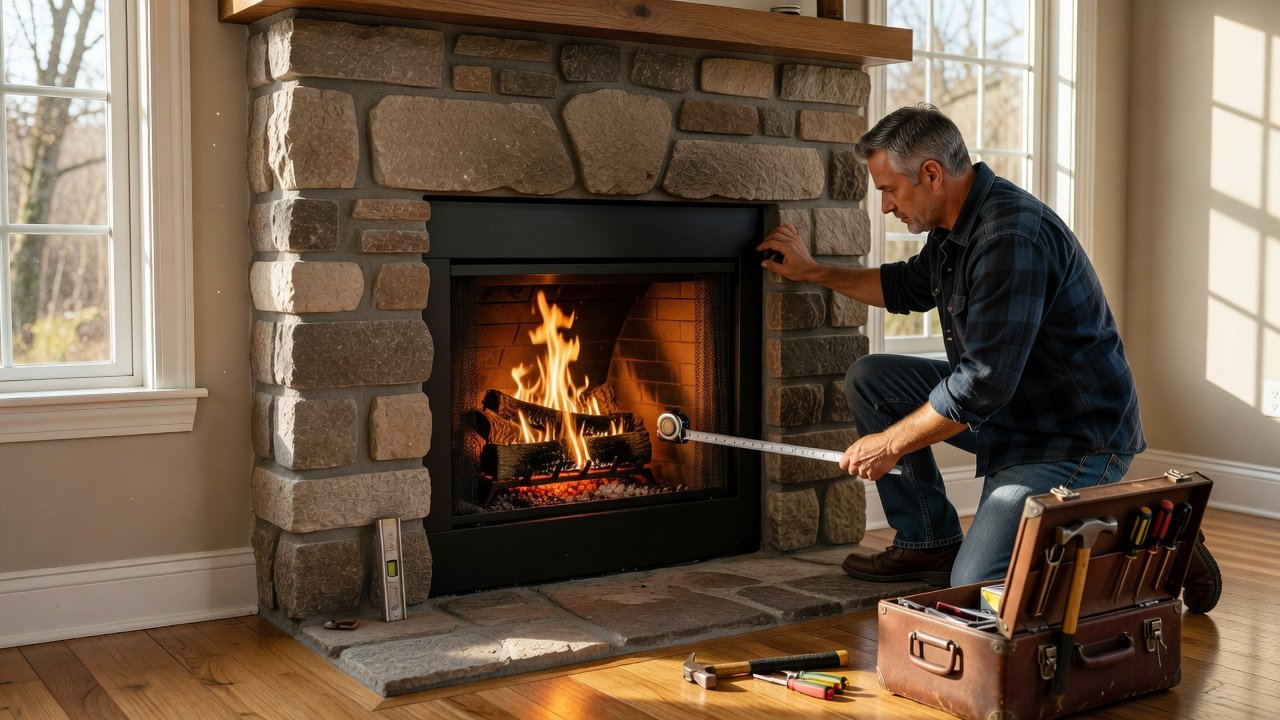
Before cleaning begins, the technician typically evaluates the exterior of the chimney.
This inspection may include checking:
- Chimney crown
- Chimney cap
- Flashing
- Brickwork
- Mortar joints
- Visible signs of water damage
Many homes throughout Paramus, Ridgewood, Fair Lawn, and neighboring Bergen County communities feature older masonry chimneys where exterior deterioration often develops before interior problems become visible.
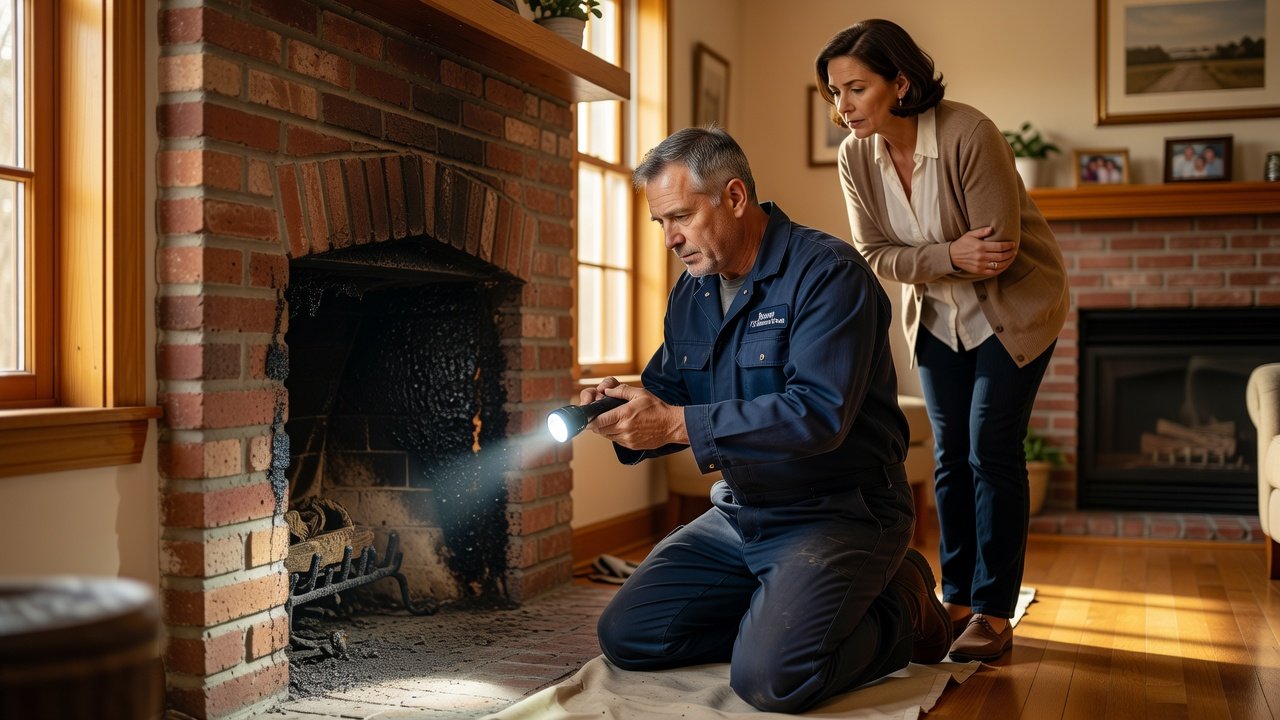
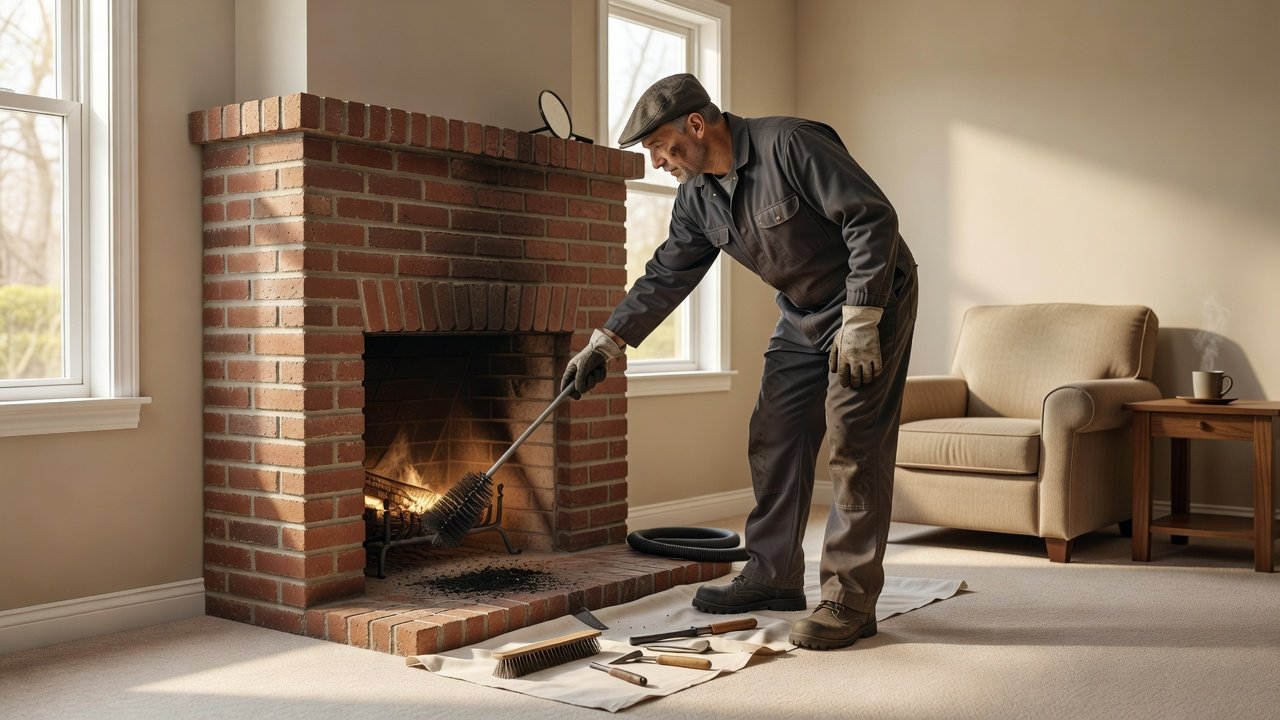
After the exterior inspection, the technician prepares the fireplace for cleaning by installing protective coverings and connecting commercial-grade vacuum equipment to contain dust.
Step 2: Cleaning the Chimney Flue
The chimney flue is then cleaned using brushes specifically matched to the dimensions of your chimney liner. Multiple passes remove soot, creosote, nesting materials, and other debris from the chimney walls. During cleaning, the technician evaluates the type of creosote present.
Creosote generally falls into three stages:
- Stage 1: Light, dry soot that removes easily during routine cleaning.
- Stage 2: Thicker, flaky or tar-like buildup requiring more aggressive brushing.
- Stage 3: Hardened glazed creosote that often requires specialized removal techniques beyond standard chimney sweeping.
Identifying the stage of creosote buildup helps determine whether additional treatment is necessary to reduce chimney fire risk.
Step 3: Cleaning the Firebox and Smoke Chamber
Once the flue has been cleaned, attention shifts to the fireplace itself.
The technician cleans and evaluates the:
- Firebox
- Smoke chamber
- Smoke shelf
- Damper assembly
The smoke chamber directs combustion gases into the chimney and often accumulates significant soot over time. The technician also checks the damper to verify that it opens and closes properly. A damaged or poorly sealing damper can reduce energy efficiency while allowing cold air, moisture, and animals to enter the chimney.
Step 4: Completing the Level 1 Chimney Inspection
A routine chimney cleaning should include a Level 1 chimney inspection, as recommended by NFPA 211 for chimneys that receive regular annual maintenance.
During this inspection, the technician evaluates all readily accessible portions of the chimney system, including:
- Firebox
- Chimney liner
- Chimney crown
- Flashing
- Chimney cap
- Visible masonry
If you’ve recently purchased your home, changed heating appliances, experienced a chimney fire, or suspect hidden damage, a Level 2 chimney inspection with video camera scanning may also be recommended. In the Paramus area, a Level 2 inspection generally adds approximately $150–$250 to the cost of a standard chimney cleaning.
Step 5: Reviewing the Inspection Report
After cleaning and inspection are complete, the technician should provide a written report summarizing the chimney’s condition.
A professional report typically includes:
- Overall chimney condition
- Areas requiring monitoring
- Recommended repairs
- Photographs when appropriate
- Maintenance recommendations
This documentation is valuable for homeowners, insurance companies, and future real estate transactions. Rather than focusing on sales, a reputable chimney company explains inspection findings clearly and recommends repairs only when supported by the inspection.
Step 6: Minor Repairs May Be Completed During the Visit
Depending on the inspection findings, some minor repairs may be completed during the same appointment.
These commonly include:
- Chimney cap replacement
- Damper adjustments
- Minor crown sealing
- Small masonry touch-ups
Larger projects such as chimney relining, extensive masonry repairs, flashing replacement, or firebox reconstruction typically require a separate estimate and follow-up appointment. Homeowners should never feel pressured into approving major repairs immediately without reviewing written documentation.
Step 7: Plan for Next Year’s Inspection
Regular chimney maintenance is one of the simplest ways to prevent costly repairs. NFPA 211 recommends annual chimney inspections for fireplaces regardless of how often they are used. For homeowners throughout Bergen County, scheduling chimney service during late summer or early fall often provides greater appointment availability before the busy heating season begins. Booking your next inspection before the technician leaves can help you avoid the fall rush.
Why Smoke May Still Enter the Room After Cleaning
Some homeowners notice minor smoke entering the room during the first fire after a chimney cleaning. Often, this isn’t caused by the cleaning itself. A cold chimney can temporarily prevent proper draft until warm air begins moving upward through the flue.
One common solution is warming the flue by holding a rolled newspaper or fire starter near the open damper for about one minute before lighting the main fire. If smoke problems continue after multiple fires, additional evaluation may be necessary to identify issues such as restricted airflow, chimney cap problems, or negative air pressure inside the home.
Schedule a Professional Chimney Sweep in Paramus
Annual chimney cleaning does much more than remove soot.
A professional chimney sweep helps identify developing problems, improve fireplace performance, and reduce the risk of chimney fires and carbon monoxide exposure.
Ridgewood Chimney proudly serves homeowners throughout Paramus, Ridgewood, Fair Lawn, Hawthorne, Waldwick, and surrounding Bergen County communities.
Our CSIA-certified technicians provide comprehensive chimney cleanings, Level 1 and Level 2 inspections, detailed written reports, and honest recommendations based on your chimney’s actual condition.
Contact Ridgewood Chimney today to schedule your free chimney inspection appointment and make sure your fireplace is clean, safe, and ready before the next heating season.
Related from Ridgewood Chimney: Chimney Sweep Cleaning Repair Ridgewood NJ in Glen Rock · How Much Does Chimney Cleaning Cost in Paramus and Ridgewood, NJ?
Our services
Reliable Chimney Care in Mission Viejo · Reliable Chimney Care in Los Alamitos · Reliable Chimney Care in Lake Forest · Reliable Chimney Care in Laguna Woods · Reliable Chimney Care in Laguna Niguel · Reliable Chimney Care in Laguna Hills
Areas we serve
Ridgewood, NJ · Ridgewood, NJ · Ridgewood, NJ · Ridgewood, NJ · Paramus, NJ · Ridgewood, NJ · Ridgewood, NJ · All areas →