Published October 27, 2026
Chimney Repair in Ridgewood, NJ: Warning Signs You Shouldn’t Wait On
Chimney damage in Ridgewood, New Jersey, often starts with small, easy-to-miss signs. You might notice cracks in the mortar, a musty smell after rain, or white staining on the exterior brick. These problems may look minor, but they can indicate moisture intrusion or deterioration that worsens over time.
Recognizing these warning signs early can help you address damage before it requires more extensive repairs. Here is what Ridgewood homeowners should look for, when to call a chimney professional, and what to know about repair costs.
Why Timing Matters for Chimney Repair
Chimneys face rain, snow, freezing temperatures, and repeated temperature changes throughout the year. When moisture enters cracks in brick or mortar, freezing and thawing can contribute to further deterioration. Damaged crowns, flashing, and mortar joints can also allow water to enter the chimney system.
Annual chimney inspections can help identify visible deterioration, blockages, and other problems before they become more serious. The Chimney Safety Institute of America (CSIA), following National Fire Protection Association guidance, recommends having chimneys inspected at least once a year and repaired or cleaned when necessary.
Scheduling an inspection before the heating season can give you more time to address problems before regular fireplace use begins. However, if you notice a serious warning sign, do not wait for a particular season to have it assessed.
Warning Signs That Need Prompt Professional Attention
1. White Staining on the Exterior Brick
White, powdery deposits on brickwork are often called efflorescence. They form when moisture moves through masonry and leaves soluble salts behind as the water evaporates.
Efflorescence does not automatically mean the chimney has structural damage. However, recurring white deposits can indicate moisture movement that deserves investigation, especially when accompanied by cracked mortar, loose bricks, or flaking surfaces.
A chimney professional can assess the likely source of moisture and determine whether repairs or other corrective work are needed.
2. Cracked or Crumbling Mortar Joints
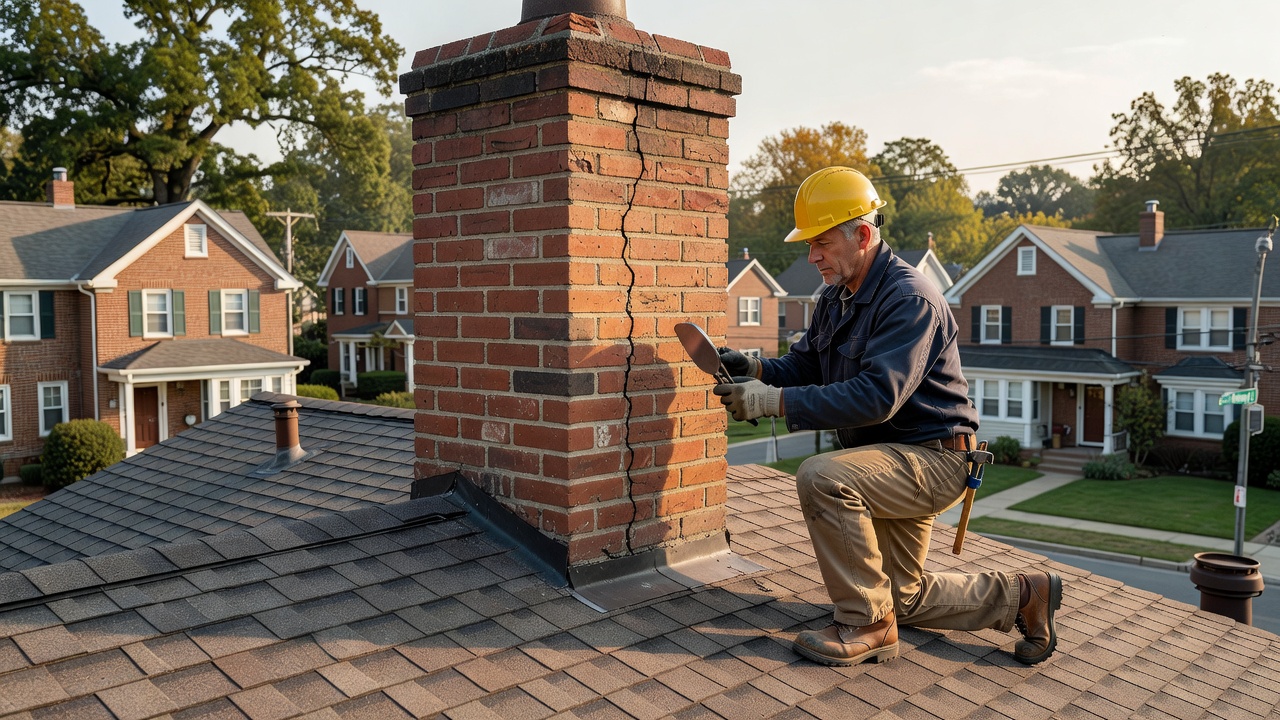
Inspect the chimney exterior from a safe location on the ground. Look for gaps between bricks, missing mortar, crumbling joints, or areas where the masonry appears loose.
Damaged mortar can allow water to enter the chimney structure. Depending on the extent of deterioration, a professional may recommend repointing or tuckpointing, which involves removing deteriorated mortar and replacing it with suitable new mortar.
Addressing damaged joints before the deterioration spreads may help prevent more extensive masonry repairs. The appropriate repair and cost will depend on the affected area, chimney height, mortar condition, and accessibility.
3. A Cracked or Deteriorating Chimney Crown
The chimney crown is the masonry or concrete structure at the top of many masonry chimneys. It helps direct water away from the chimney walls while allowing the flue opening to remain unobstructed.
Look for visible cracks, missing sections, crumbling material, or signs of repeated patching. Do not climb onto the roof to inspect the crown yourself. A chimney professional can examine it safely and determine whether sealing, repair, or replacement is appropriate.
A deteriorated crown can allow moisture to enter the masonry and contribute to damage to the chimney structure or flue system.
4. Flaking Material or Damage Inside the Firebox
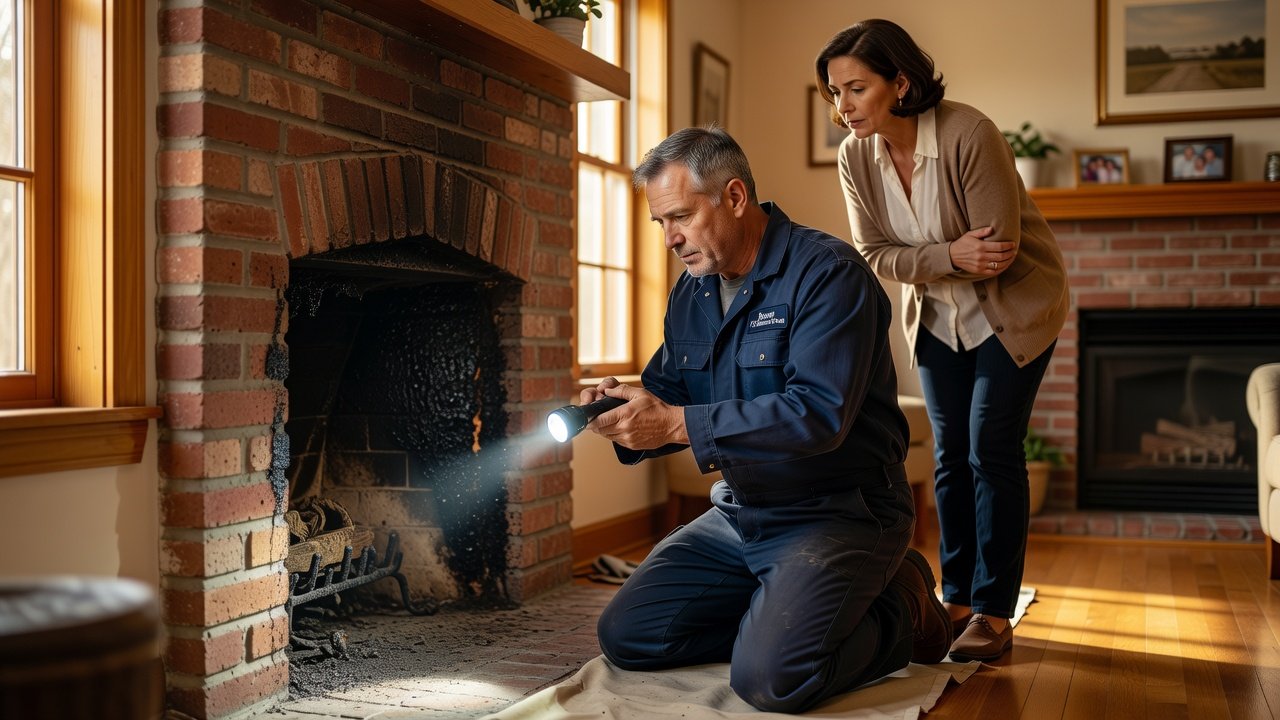
Use a flashlight to look at the accessible parts of the fireplace without entering the firebox or dismantling any components. Watch for damaged firebrick, missing material, unusual debris, or visible deterioration.
Thin, broken pieces of clay tile may indicate damage to the flue liner, but debris alone cannot confirm the source. A professional inspection is needed to determine whether the liner or another part of the chimney system has deteriorated.
A damaged flue liner can create a safety concern because the liner helps contain combustion gases and protect surrounding materials from heat. If you suspect liner damage, stop using the fireplace until a qualified chimney professional has assessed it.
5. A Persistent Smoky or Musty Odor
A strong smell coming from a fireplace when it is not in use can have several causes. Moisture may be affecting soot or creosote deposits, or air pressure inside the house may be drawing air down the chimney. Debris, a blockage, or another ventilation problem may also be involved.
Pay attention to when the odor appears. A smell that becomes stronger after rain may point to moisture intrusion, while a smoky odor can indicate a draft or venting issue.
Do not assume the cause based on smell alone. Arrange an inspection before using the fireplace if the odor persists or is accompanied by smoke entering the room. If a carbon monoxide alarm sounds, leave the building and contact emergency services.
6. Spalling or Flaking Exterior Brick
Spalling occurs when the surface of a brick breaks away or flakes off. You may notice damaged brick faces, loose masonry fragments, or pieces collecting on the roof or in the gutters.
Moisture exposure and freeze-thaw cycles can contribute to spalling, although the underlying cause should be assessed before repairs begin. A professional may recommend replacing damaged bricks, repairing mortar joints, addressing water entry, or completing additional masonry work.
Simply applying a surface sealant may not resolve the underlying problem. The repair should address the source of moisture and the condition of the masonry.
Other Signs to Monitor
Rust on the Damper or Firebox
Rust on metal fireplace components can indicate moisture exposure. Minor surface rust does not necessarily mean the chimney is unsafe, but extensive corrosion, damaged parts, or a damper that does not open and close properly needs professional attention.
Ask your chimney professional to assess the source of moisture and whether any components require repair or replacement. A top-sealing damper may be worth discussing if it is suitable for your fireplace, but it is not a substitute for correcting water intrusion or other damage.
Gaps or Deterioration Around Roof Flashing
Flashing is the material used to seal the area where the chimney passes through the roof. Loose metal, visible gaps, deteriorated sealant, or water stains near the chimney may indicate a problem.
A flashing issue can allow water into the roof or nearby building materials. Have the area assessed promptly, particularly if you notice leaks or interior water stains. Depending on the cause, repairs may require a qualified chimney contractor, a roofing professional, or both.
What Does Chimney Repair in Ridgewood Typically Cost?
Chimney repair costs depend on the type of damage, the size and height of the chimney, the materials required, and how safely workers can access the repair area.
Published national cost guides provide broad estimates, but they are not guaranteed prices for Ridgewood or Bergen County. Minor repairs may cost a few hundred dollars, while extensive masonry work, liner replacement, or rebuilding can cost several thousand dollars.
The following examples illustrate the range of possible work:
-
Minor crown repairs: Small cracks or localized deterioration may be less expensive to address than a complete crown replacement.
-
Tuckpointing or repointing: The cost depends on the amount of damaged mortar, the chimney’s height, and the work required to access it.
-
Flue liner repair or replacement: Costs vary with the liner material, chimney dimensions, and whether localized repairs are possible.
-
Partial or full chimney rebuilding: Extensive structural damage can require substantial masonry work and additional equipment for safe access.
For reference, HomeGuide’s January 2026 cost guide lists broad national ranges of approximately $500 to $2,500 for repointing, $1,500 to $7,000 for chimney liner replacement, and $4,000 to $15,000 for a full chimney rebuild or replacement. Actual prices can differ significantly by project and location.
Ask for a written estimate that identifies the problem, the proposed repair, the materials involved, and any additional work that may be necessary. An inspection can help establish the scope of work, but the final price should reflect the actual condition of your chimney.
Schedule a Chimney Repair Inspection in Ridgewood
If you notice cracked mortar, a damaged chimney crown, deteriorating brick, persistent odors, or possible flue liner damage, arranging a professional inspection is a sensible next step. Addressing the underlying problem can help prevent further deterioration and determine whether your chimney is safe to use.
Ridgewood Chimney serves Ridgewood and surrounding Bergen County communities, including Glen Rock, Wyckoff, Ho-Ho-Kus, Waldwick, and Mahwah. Contact the company to ask about an inspection and discuss any warning signs you have noticed.
Before scheduling, confirm whether the inspection is free and what it includes. A professional assessment should help you understand the condition of your chimney, which repairs are necessary, and why those repairs are recommended.
Related from Ridgewood Chimney: Chimney Repair in Ridgewood, NJ · Chimney Repair in Ridgewood, NJ — Spot the Warning Signs Before They G · Chimney Repair in Wyckoff
Our services
Chimney Repair in Ridgewood, NJ · Chimney Repair in Ridgewood, NJ · Chimney Repair in Ridgewood · Chimney Repair in Ridgewood, NJ · Chimney Repair in Ridgewood · Chimney Repair in Ridgewood, NJ
Areas we serve
Ridgewood, NJ · Ridgewood, NJ · Ridgewood, NJ · Ridgewood, NJ · Paramus, NJ · Ridgewood, NJ · Ridgewood, NJ · All areas →