Chimney Liner Repair in Ridgewood, NJ: How to Choose a Contractor You Can Actually Trust
A damaged chimney liner is more than a cosmetic concern. The liner helps contain combustion gases, direct them outside, and protect the surrounding chimney structure from excessive heat. For homeowners in Ridgewood and throughout Bergen County, older clay tile liners can develop cracks or deterioration after years of thermal cycling and moisture exposure. Because much of the damage is hidden inside the chimney, homeowners may not discover a problem until a professional inspection or home sale brings it to light. Choosing the right contractor starts with understanding what should be inspected, what credentials matter, and what questions to ask before work begins.
Why the Liner Matters
The liner runs through the interior of the chimney and helps protect the surrounding masonry and combustible parts of the home from combustion gases and heat. A damaged liner can affect the safety and performance of the entire chimney system.
Older homes in Ridgewood, Glen Rock, Ho-Ho-Kus, and Wyckoff commonly have clay tile liners. These systems can deteriorate over time because of repeated heating and cooling, moisture, and age. Cracked tiles or deteriorated joints should be evaluated by a qualified professional rather than assumed to be harmless.
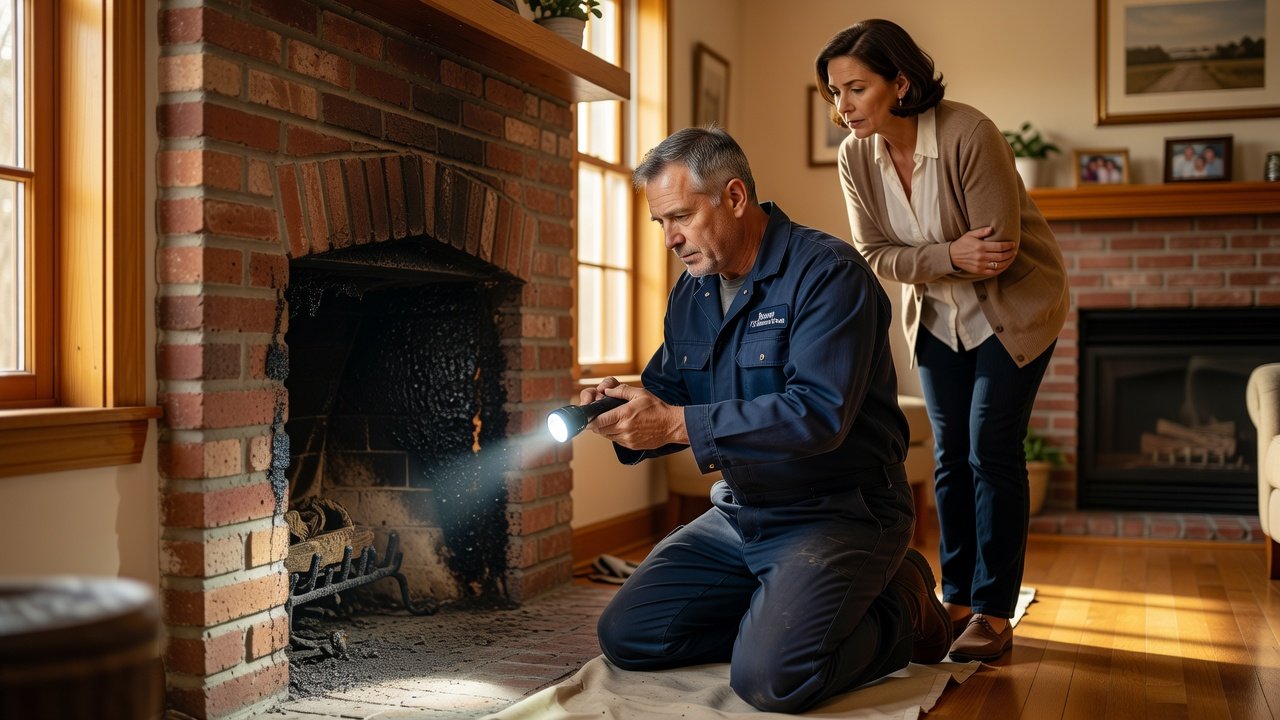
A visual inspection from the fireplace opening may not reveal damage higher in the chimney. When a more detailed evaluation is warranted, a Level 2 inspection with video scanning can provide a much clearer view of the flue.
Credentials to Look For
When comparing chimney contractors, ask about their professional credentials.
CSIA certification. The Chimney Safety Institute of America offers the Certified Chimney Sweep credential to technicians who meet its certification requirements. Ask whether the technician performing the work is currently certified.
NFI certification. If the contractor will also service or install gas appliances connected to the chimney, National Fireplace Institute certification may be another useful credential to consider.
UL-listed liner systems. If a stainless steel liner is recommended, ask which product will be installed and whether it is listed for the intended application. The liner should be appropriate for the appliance and chimney system.
You should also confirm that the contractor carries appropriate general liability insurance and workers’ compensation coverage. Ask for documentation rather than relying solely on a verbal assurance.
Questions to Ask Before Scheduling
Before allowing a contractor to begin liner work, ask:
Will you perform a Level 2 inspection before recommending a liner repair? A camera inspection can document the condition of the flue and help determine whether repair or replacement is appropriate.
What liner system do you recommend? Ask for the manufacturer, model, material, diameter, and intended application.
Can you provide a written scope of work? The proposal should explain what will be installed, how much liner is required, what additional components are included, and what the labor covers.
Who will perform the installation? Find out whether the work will be completed by the company’s own technicians or subcontractors.
Are permits required for this project? Requirements can vary by municipality and project. A contractor working in Ridgewood should be familiar with the applicable local requirements.
What does the warranty cover? Get material and labor warranty information in writing before approving the work.
Can you provide recent local references? References from Ridgewood and nearby Bergen County communities can help you evaluate the contractor’s experience with similar homes and chimney systems.
Red Flags to Watch For
Be cautious if a contractor recommends major liner work without first documenting the condition of the existing flue.
A contractor who pressures you to approve an expensive repair immediately should also raise questions. Significant chimney work deserves a written proposal and enough time for you to understand what is being recommended.
Extremely low estimates deserve the same scrutiny. The price may reflect a smaller scope, different liner material, missing components, or work that does not include everything required for a complete installation.
You should also reconsider hiring a contractor who refuses to provide proof of insurance or professional credentials.
How to Compare Liner Repair Quotes
Do not compare proposals based solely on the final price. Ask each contractor to provide an itemized estimate.
A useful proposal should identify:
- Liner manufacturer and model
- Liner material and diameter
- Approximate liner length
- Top termination components
- Appliance connection components
- Insulation or other required materials
- Labor
- Permits, if applicable
- Warranty information
This makes it easier to determine whether two contractors are actually proposing the same solution.
For example, stainless steel liner materials can differ in alloy and application. The appropriate liner depends on the appliance, fuel type, flue configuration, and manufacturer’s requirements. A qualified contractor should be able to explain why the proposed system is appropriate for your particular chimney.
What Professional Liner Repair Should Look Like
A thorough process starts with an inspection rather than a guess. If a Level 2 inspection is appropriate, the contractor should document the condition of the flue and explain the findings before recommending a repair.
Once the repair method is agreed upon, the contractor should protect the home from debris, install the specified liner system according to the manufacturer’s requirements, and verify that the connections and termination are properly secured.
After installation, the chimney system should be checked to make sure it is functioning properly. You should also receive documentation describing the work that was completed and any recommendations for future maintenance.
Get an Inspection Before You Commit to Liner Repair
Ridgewood Chimney serves homeowners throughout Bergen County, including Ridgewood, Glen Rock, Ho-Ho-Kus, Wyckoff, Ramsey, and surrounding communities. If you have been told that your chimney needs liner repair or you want a second opinion on an existing estimate, an inspection can help you understand the actual condition of the system before approving major work.
Contact Ridgewood Chimney to schedule an inspection and get a documented assessment of your chimney liner before making a repair decision.
Related from Ridgewood Chimney: Chimney Sweep Cleaning Repair Ridgewood NJ in Glen Rock · Chimney Repair in Ridgewood, NJ · What Chimney Liner Repair in Ridgewood, NJ Actually Costs and How to H
Our services
Reliable Chimney Care in Laguna Hills · Reliable Chimney Care in Laguna · Reliable Chimney Care in Irvine · Reliable Chimney Care in Huntington Beach · Reliable Chimney Care in Garden Grove · Reliable Chimney Care in Fountain Valley
Areas we serve
Ridgewood, NJ · Ridgewood, NJ · Ridgewood, NJ · Ridgewood, NJ · Paramus, NJ · Ridgewood, NJ · Ridgewood, NJ · All areas →