Published November 3, 2026
What Paramus Homeowners Get Wrong About Chimney Sweeping
Every fall, homeowners begin preparing their fireplaces for another heating season. Some discover problems only after lighting their first fire, such as smoke entering the living room, poor airflow, or an unusual odor. Others have not used their fireplaces in several years and assume the chimney is still in good condition.
Many chimney problems can be identified before the fireplace is used. However, common misunderstandings about chimney sweeping can cause homeowners to delay inspections or overlook maintenance. Here are six misconceptions worth correcting before winter arrives in Paramus.
“I Don’t Burn Wood, So I Don’t Need a Chimney Sweep”
It is easy to assume that a chimney only needs attention when someone burns wood. However, chimneys and venting systems connected to gas appliances also require regular inspection.
Gas appliances generally produce less soot and creosote than wood-burning fireplaces. That does not mean their venting systems are maintenance-free. Bird nests, leaves, debris, damaged liners, and improper venting can interfere with the safe removal of combustion gases.
The Chimney Safety Institute of America (CSIA) recommends annual inspections for all chimneys, including those connected to gas furnaces. A professional can check the accessible parts of the system for blockages, deterioration, and other conditions that may affect safe operation.
The cleaning requirements may differ depending on the fuel and appliance. The inspection is still important even when you rarely use a wood-burning fireplace.
“If No Smoke Is Coming into the House, the Chimney Is Fine”
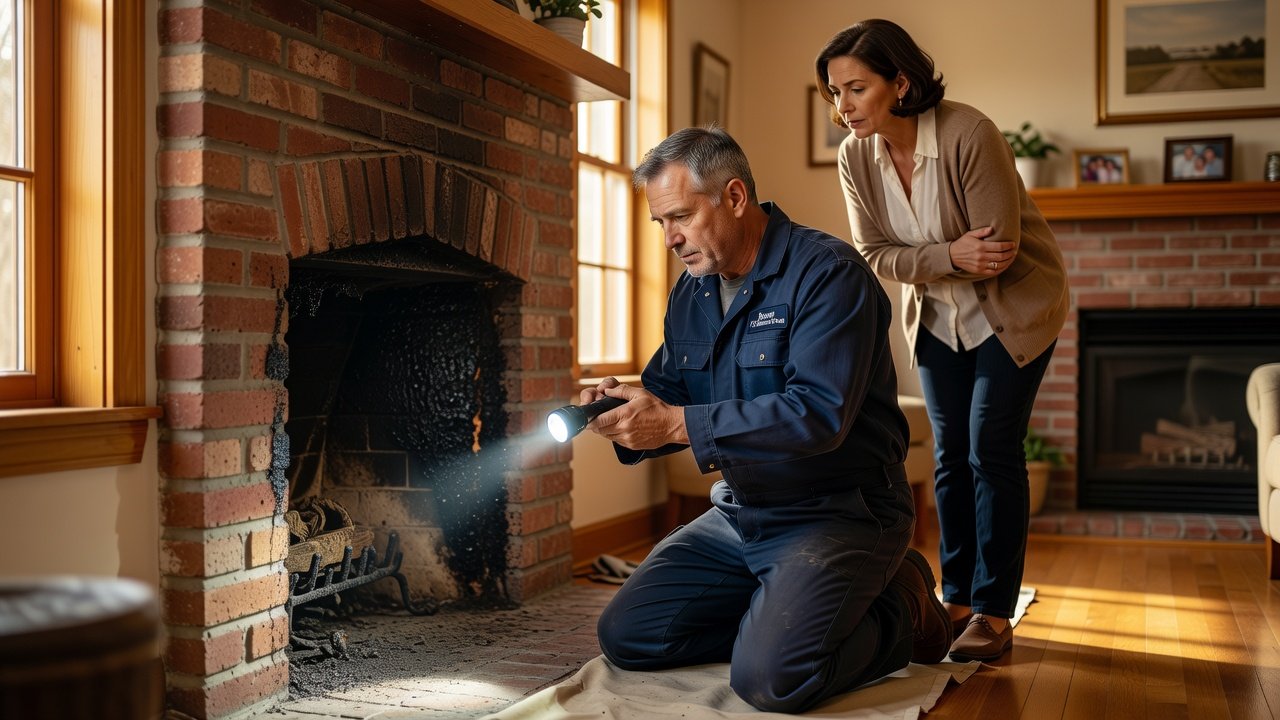
A chimney can appear to draft normally while still having problems that are not visible from the living room. Creosote can accumulate along the flue walls without causing obvious smoke problems inside the home.
Creosote forms when wood smoke cools and condenses inside the chimney. It can appear as loose soot, flaky deposits, or a hard, glazed coating. The more hardened deposits can be difficult to remove and create a serious fire hazard.
A chimney fire can damage the flue liner and other parts of the chimney, even if the damage is not immediately obvious. CSIA advises homeowners to arrange an inspection after a chimney fire before using the system again.
Carbon monoxide is another concern. It is a colorless, odorless gas produced by incomplete fuel combustion. Damaged venting systems or malfunctioning fuel-burning appliances can allow it to enter living spaces.
The U.S. Consumer Product Safety Commission reports that more than 200 people in the United States die annually from carbon monoxide produced by non-automotive consumer products. Fireplaces and other fuel-burning appliances are among the sources.
A chimney that appears to draft properly is not necessarily free of damage. Annual inspections and working carbon monoxide alarms are important parts of home safety.
“Chimney Sweeping Is Just Brushing Out Soot”
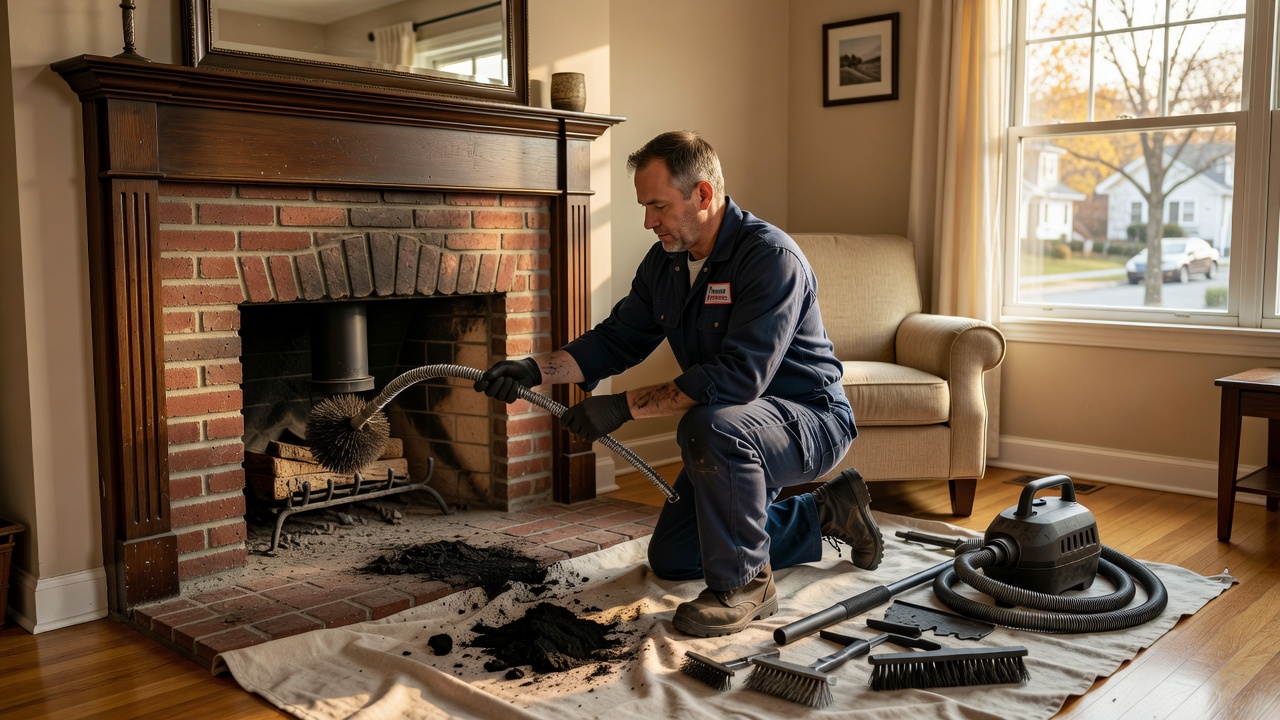
A chimney brush is an important cleaning tool, but professional chimney maintenance involves more than removing visible deposits.
A chimney sweep appointment may include cleaning along with a Level 1 inspection under the applicable inspection standards. This inspection covers accessible portions of the chimney exterior and interior, the appliance, and the chimney connection.
Depending on the system, the technician may examine:
-
The firebox and smoke chamber.
-
The damper and its operation.
-
Accessible portions of the flue liner.
-
Visible exterior masonry.
-
The chimney crown and cap, where accessible.
-
Signs of creosote buildup, debris, or water damage.
Cleaning removes accumulated soot and creosote when needed. Inspection helps identify conditions that may require additional maintenance or repair.
These services are related, but they are not identical. Ask whether your appointment includes both cleaning and inspection and request a written report describing the findings.
At Ridgewood Chimney, homeowners should confirm what is included in the company’s sweep and inspection service before scheduling.
“My Chimney Was Swept Two Years Ago, So I’m Probably Fine”
A chimney’s condition can change between inspections. Moisture can damage mortar joints, a cap can become loose, and animals can enter through an opening. Wood-burning fireplaces can also accumulate creosote depending on how frequently they are used and the type of wood burned.
The CSIA recommends annual chimney inspections. Cleaning, however, should be performed as needed based on the amount and type of deposits present.
For masonry fireplaces, CSIA recommends sweeping when soot buildup reaches approximately 1/8 inch, or sooner if glazed deposits are present. Heavy use, poor burning practices, and unseasoned wood can increase the need for cleaning.
A chimney that has not been used for several years should not automatically be considered safe. An inspection can identify blockages, deterioration, and other problems that may have developed while the fireplace was idle.
“Chimney Sweeping Costs Too Much to Do Every Year”
The cost of chimney sweeping depends on the appliance, chimney configuration, amount of buildup, and services included. A straightforward cleaning may cost less than a job involving heavy creosote removal, difficult access, or additional inspection work.
There is no single verified price that applies to every Paramus home. Before scheduling, ask the contractor for a written estimate that separates inspection, cleaning, and any recommended repairs.
It is also important to understand what the service does not include. A standard cleaning does not automatically cover liner replacement, crown repair, flashing work, or rebuilding damaged masonry.
Delaying necessary maintenance can allow problems to become more extensive. A damaged liner or deteriorating chimney may require significant repairs, depending on the condition. Although insurance coverage depends on the policy and circumstances, homeowners should not assume that an insurer will pay for damage caused by neglected maintenance.
Annual inspection is a practical way to identify problems early and make informed decisions about maintenance.
“Any Handyman Can Sweep a Chimney”
Chimney sweeping involves more than removing visible soot from a fireplace. A technician needs to understand chimney construction, venting, combustion deposits, and the conditions that can affect safe operation.
The Chimney Safety Institute of America offers the Certified Chimney Sweep credential. Candidates must complete the required review and pass the certification examination. The credential is nationally recognized as an indicator of knowledge in chimney and venting system evaluation and maintenance.
Homeowners can use the CSIA directory to verify a technician’s certification. Ask for the technician’s name and certification details before booking.
Certification is not the only factor to consider. Ask whether the company carries appropriate insurance, provides written inspection findings, and can explain the recommended cleaning or repair work.
If the technician identifies a problem, ask for photographs or other documentation when available. A professional should be able to explain what was found, why it matters, and what work is necessary.
Schedule a Chimney Inspection in Paramus, NJ
If your fireplace has not been inspected in the past year, arranging an inspection before regular winter use is a sensible step. A professional can evaluate accessible parts of the chimney, identify buildup or damage, and explain whether cleaning or repairs are needed.
Ridgewood Chimney advertises service in Paramus and surrounding Bergen County communities. Contact the company to confirm its current service area, whether its inspection is free, and what the appointment includes.
Taking care of chimney maintenance before the heating season can help you identify potential problems before they interfere with fireplace use.
Related from Ridgewood Chimney: What Homeowners in Ho-Ho-Kus Get Wrong About Chimney Sweeping · Chimney Repair in Ridgewood, NJ · Chimney Repair in Paramus, NJ
Our services
Chimney Repair in Ridgewood, NJ · Chimney Repair in Ridgewood · Chimney Repair in Ridgewood, NJ · Stainless Steel Chimney Liners for Ridgewood, NJ Homes · Chimney Sweep Cleaning Repair Ridgewood NJ in Glen Rock · Chimney Cap Installation in Ridgewood, NJ
Areas we serve
Ridgewood, NJ · Ridgewood, NJ · Ridgewood, NJ · Ridgewood, NJ · Paramus, NJ · Ridgewood, NJ · Ridgewood, NJ · All areas →