What Wyckoff Homeowners Keep Getting Wrong About Fireplace Cleaning
Many homeowners in Wyckoff and Ridgewood handle basic fireplace maintenance themselves. Removing cooled ash, checking the visible firebox, and burning properly seasoned wood are reasonable parts of routine care.
The line becomes different when maintenance involves the chimney flue, smoke chamber, liner, or other parts of the venting system. Those areas can contain deposits or damage that cannot be evaluated safely from the fireplace opening. Understanding what you can do yourself and when to call a professional can help you maintain a wood-burning fireplace without taking unnecessary risks.
Before You Clean Your Fireplace
Start by checking when the chimney was last professionally inspected.
CSIA follows NFPA 211 guidance recommending that chimneys, fireplaces, and vents be inspected at least once a year. Cleaning, maintenance, and repairs should be performed when necessary. The required cleaning frequency depends on factors such as use, the installation, fuel type, and burning habits.
That means an annual inspection does not automatically mean every fireplace needs a full chimney cleaning every year.
Also think about what you burned during the previous season. EPA recommends burning dry, seasoned wood and says moisture content below 20% is best. A moisture meter can help determine whether firewood is ready to burn.
Wet or poorly seasoned wood can produce more smoke and contribute to deposit formation.
How to Recognize Different Chimney Deposits
One common problem with DIY chimney-cleaning advice is treating creosote as if it always looks the same.
Creosote can appear as flaky, crusty, sticky, tar-like, or hardened and glazed material. CSIA explains that ordinary soot and creosote deposits can often be handled with standard brushing, while hard or glazed deposits may require specialized mechanical cleaning.
The commonly repeated “Stage 1, Stage 2, Stage 3” system should not be presented as an NFPA classification.
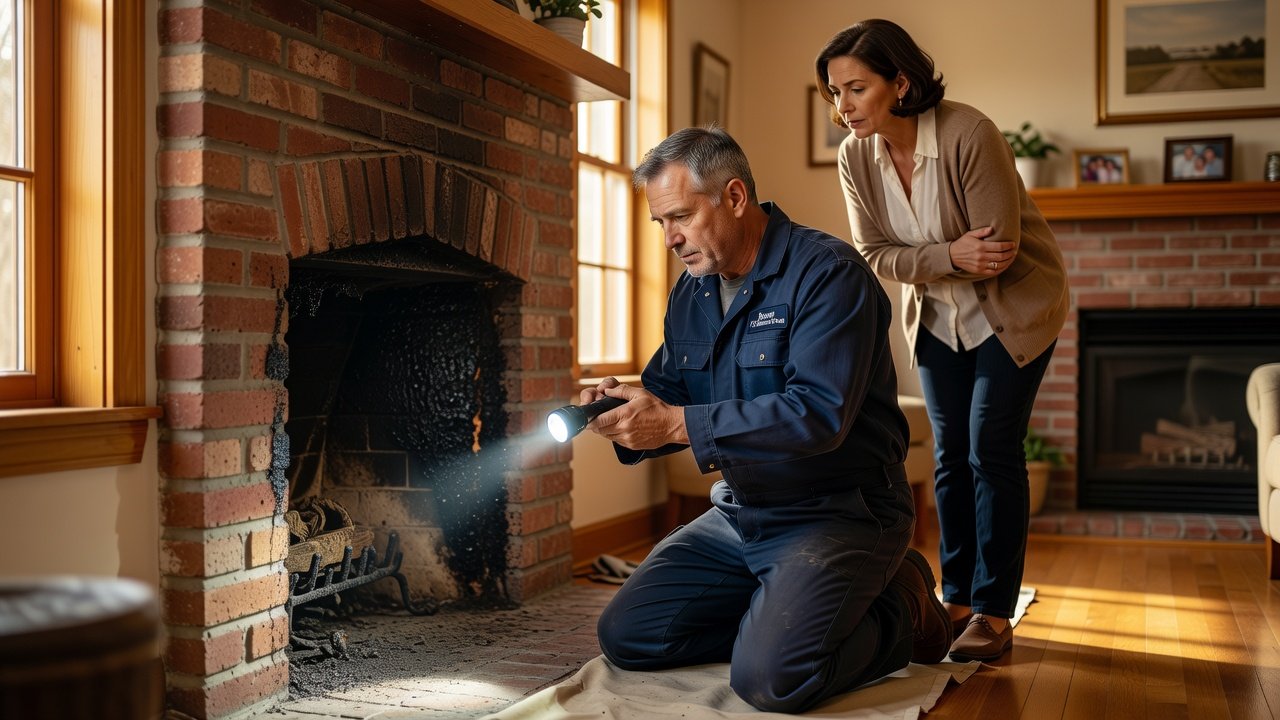
More importantly, homeowners should not attempt to remove significant hardened or glazed deposits with improvised tools. CSIA says specialized mechanical cleaning should be performed by professional sweeps familiar with the equipment because improper use can be hazardous to both the operator and the chimney.
If you see substantial shiny, sticky, or hardened buildup, stop treating the job as a routine DIY cleaning and arrange a professional evaluation.
What Homeowners Can Safely Do
Remove Cooled Ash
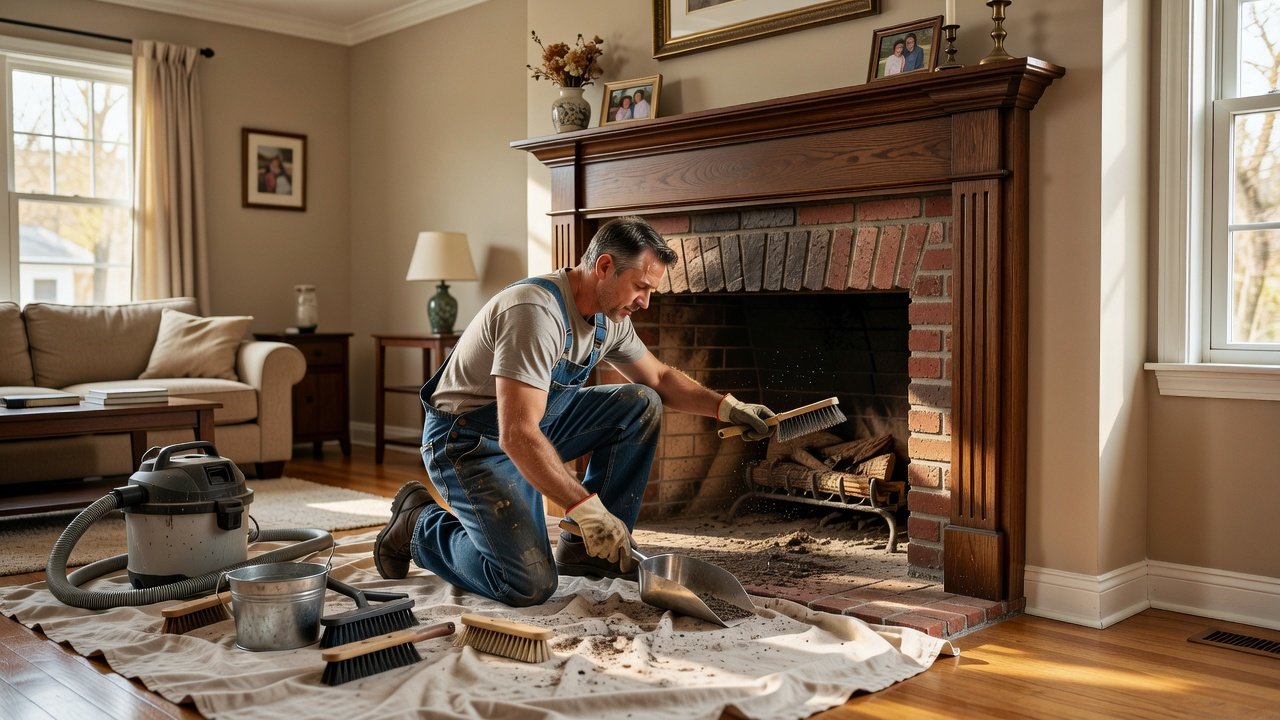
You can remove ash from the firebox when necessary.
Wait until the ash is completely cool rather than relying on an arbitrary number of hours. Use an appropriate metal container with a secure lid and keep it away from combustible materials.
Do not assume that removing ash cleans the chimney. Firebox maintenance and chimney sweeping are different tasks.
Check the Visible Firebox
A basic visual check can reveal obvious problems.
Look for:
- Cracked or damaged firebrick
- Loose components
- Unusual staining
- Excessive visible deposits
- Problems with the damper
- Debris falling into the fireplace
If you notice significant cracking or deterioration, do not try to determine the structural condition of the chimney from the fireplace opening alone.
Check Your Firewood
EPA recommends dry, seasoned wood with moisture below 20%. Burning properly seasoned wood helps reduce smoke and supports more efficient combustion.
A moisture meter is a useful homeowner tool. Test split pieces rather than relying only on how the wood looks or feels.
Where DIY Fireplace Cleaning Should Stop
A chimney is more than the firebox.
The complete system can include the firebox, damper, smoke chamber, flue liner, chimney structure, crown, flashing, and termination.
Some of those components cannot be adequately evaluated from below.
CSIA explains that a complete chimney sweeping includes the chimney flue and smoke chamber, not simply the visible brick inside the firebox.
That is why a homeowner should be cautious about attempting a full chimney sweep without the appropriate equipment and knowledge.
Do Not Attempt to Remove Heavy Glazed Deposits Yourself
Standard brushing can be appropriate for ordinary soot and creosote deposits. Hard or glazed deposits are different.
CSIA notes that mechanical cleaning may be necessary for hard creosote or glaze and says this type of equipment should be used by professional sweeps familiar with it.
Chemical chimney-cleaning products also should not be treated as a substitute for mechanical sweeping and inspection. CSIA says some chemical products may be used by professionals as part of the cleaning process, but they are not an adequate replacement for mechanical cleaning and inspection.
What About the Smoke Chamber and Smoke Shelf?
The smoke chamber and smoke shelf are important parts of the chimney system.
Deposits and debris can accumulate in areas that are difficult to see from the firebox. A complete chimney sweeping should address the chimney flue and smoke chamber rather than stopping at the visible fireplace opening.
Do not assume that being able to see the chimney bricks means the entire system is clean.
If you are unsure whether deposits are present in the smoke chamber or other inaccessible areas, have the system evaluated by a qualified chimney professional.
Do You Need a Camera Inspection?
Not every routine chimney inspection automatically requires a camera.
The inspection level depends on the circumstances.
A Level 1 inspection is generally used when the chimney and venting system are readily accessible and there are no known changes requiring a more extensive examination.
A Level 2 inspection is more comprehensive and can be appropriate for circumstances such as a property sale, relining, a chimney or building fire, certain weather or seismic events, or an operating malfunction that could have caused damage.
Level 2 includes video scanning or a similar examination of the chimney interior.
If a company recommends a camera inspection, ask what prompted the recommendation and what inspection level is being performed.
What If Your Fireplace Smokes Into the Room?
Do not automatically assume that a smoky fireplace is simply experiencing a cold-flue problem.
Smoke entering the home can have several possible causes, including improper operation, insufficient draft, a blockage, installation problems, or another venting issue.
EPA advises that if you smell smoke inside the home, you should stop using the wood-burning appliance and have the system checked by a professional.
Do not continue experimenting with different lighting techniques if smoke continues entering the living space.
A professional can determine whether the problem is related to the chimney, appliance, venting, or operating conditions.
What Should You Document?
Keeping basic maintenance records is useful.
Record:
- The date of the inspection
- The date of cleaning
- Any visible problems
- Repairs performed
- Recommendations made by the technician
- Photos or inspection documentation provided by the company
These records can help you remember when service was performed and give you useful information when discussing future repairs.
However, do not assume that a personal maintenance log automatically satisfies an insurance company or other third party. Documentation requirements vary.
How Often Should a Wyckoff Fireplace Be Cleaned?
There is no single cleaning interval that applies to every fireplace.
CSIA explains that cleaning frequency depends on use, installation, fuel, and burning habits. It recommends annual inspection and says masonry fireplaces should be swept when soot buildup reaches about 1/8 inch or sooner if glaze is present.
The practical takeaway is simple: inspect annually and clean when the condition of the chimney indicates that cleaning is necessary.
If you burn frequently, use poor-quality or wet wood, notice significant deposits, or have another condition affecting the chimney, the system may require attention sooner.
When to Call a Chimney Professional
Arrange a professional inspection if you notice:
- Heavy or glazed creosote
- Cracked or deteriorating visible masonry
- Possible flue damage
- Repeated smoke entering the room
- A suspected chimney blockage
- Evidence of a chimney fire
- Water entering the fireplace
- A damaged chimney cap
- Unusual odors or deposits
- A change in the appliance or fuel type
A professional can determine whether you need routine cleaning, a more extensive inspection, repair, or another form of maintenance.
What Does Fireplace Cleaning Cost in Wyckoff?
There is no reliable universal price for fireplace or chimney cleaning in Wyckoff and Ridgewood.
The cost depends on the chimney configuration, appliance, amount and type of deposits, accessibility, inspection level, and whether repairs or additional services are necessary.
A simple cleaning should not automatically be compared with a job involving hard deposits, difficult access, a Level 2 inspection, or chimney repairs.
When comparing estimates, ask each company to explain exactly what is included.
Choosing a Chimney Professional
When hiring a chimney professional in Wyckoff or Ridgewood, ask:
- What inspection level are you performing?
- What areas will be inspected?
- What does the cleaning include?
- Will additional work require my approval?
- How will significant findings be documented?
- Are you CSIA certified?
- Do you carry appropriate insurance?
- Can I receive a written estimate?
CSIA certification can be one useful credential to verify when comparing chimney professionals.
The goal is not simply to find the lowest advertised price. It is to understand the scope of the work and make sure the service addresses the actual condition of your chimney.
The Bottom Line
Fireplace maintenance does not have to mean hiring a professional for every small task.
Homeowners can remove completely cooled ash, check visible components, monitor their firewood, and pay attention to warning signs. But chimney sweeping, evaluation of inaccessible areas, and removal of significant hard or glazed deposits are different tasks.
CSIA recommends annual chimney inspections and cleaning when necessary. EPA also recommends annual inspection of wood-burning appliances and chimneys and advises homeowners to burn dry, seasoned wood with moisture below 20%.
If your Wyckoff or Ridgewood fireplace has not been professionally inspected recently, arranging an inspection before regular seasonal use can help identify deposits, blockages, or deterioration before they become larger problems.
Related from Ridgewood Chimney: Fireplace Cleaning in Ridgewood, NJ · Chimney Sweep Cleaning Repair Ridgewood NJ in Glen Rock · What Most Ridgewood Homeowners Get Wrong About Chimney Cleaning
Our services
Chimney Repair in Ridgewood, NJ · Stainless Steel Chimney Liners for Ridgewood, NJ Homes · Chimney Sweep Cleaning Repair Ridgewood NJ in Glen Rock · Chimney Cap Installation in Ridgewood, NJ · Reliable Chimney Care in Orange · Reliable Chimney Care in Mission Viejo
Areas we serve
Ridgewood, NJ · Ridgewood, NJ · Ridgewood, NJ · Ridgewood, NJ · Paramus, NJ · Ridgewood, NJ · Ridgewood, NJ · All areas →