
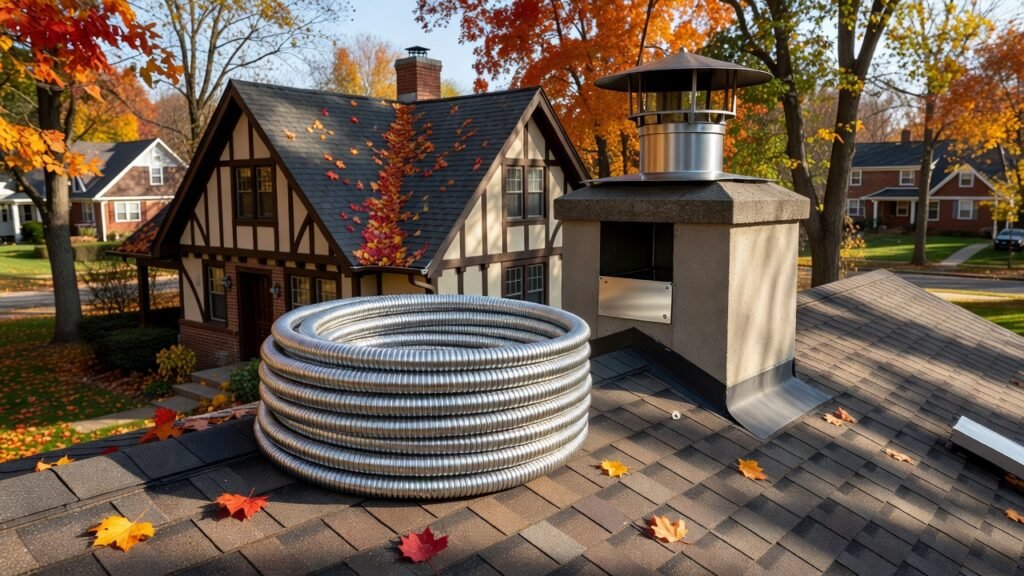
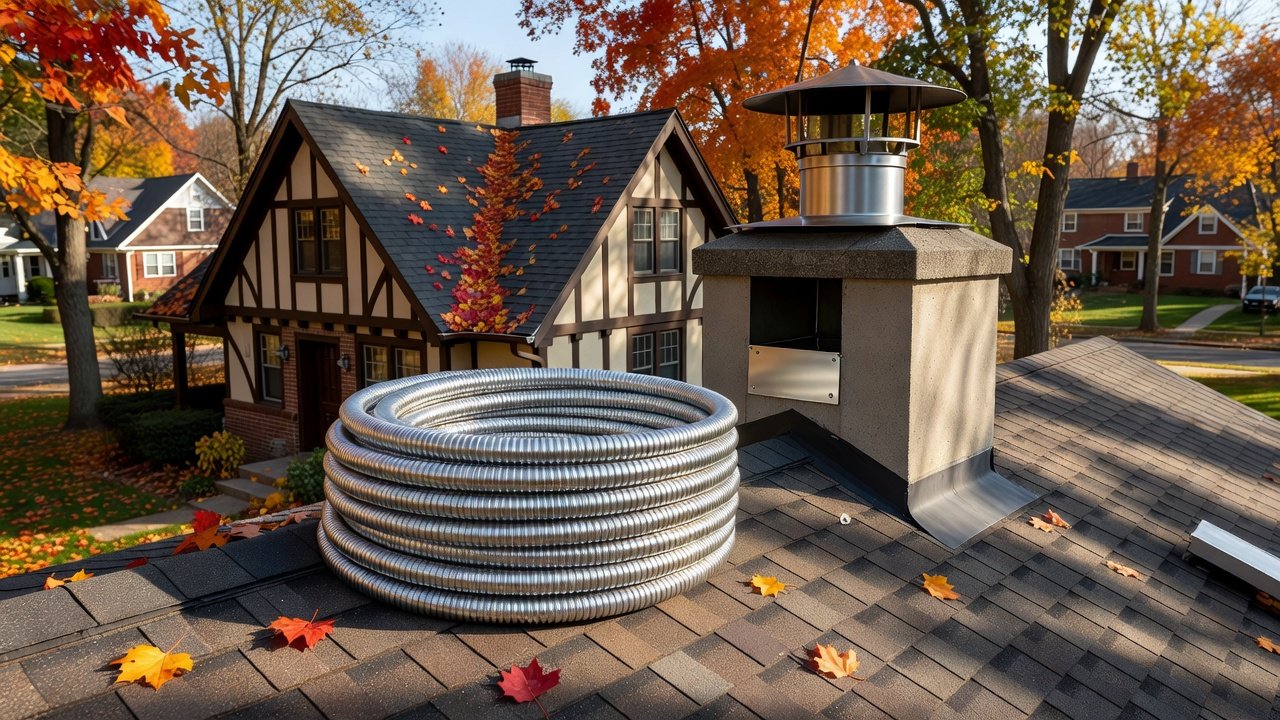
Stainless Steel Chimney Liners for Ridgewood, NJ Homes
If your chimney is unlined, cracked, or struggling to handle a newer high-efficiency appliance, a stainless steel chimney liner is the safest, most durable solution available to Ridgewood homeowners today. Stainless steel chimney liners are corrugated or rigid metal sleeves installed inside your existing masonry or factory-built chimney flue to create a continuous, code-compliant passageway for combustion gases. They are appropriate for wood-burning fireplaces, gas inserts, oil furnaces, pellet stoves, and wood stoves — and they are specifically required by NFPA 211 and the New Jersey Uniform Construction Code whenever an older clay-tile liner shows deterioration, when you convert to a new fuel type, or when you install a high-efficiency appliance that the original flue was never sized to handle.
Why Ridgewood Chimneys Often Need a New Stainless Steel Liner
Bergen County’s freeze-thaw cycle is punishing on masonry. Ridgewood’s older housing stock — particularly the Craftsman bungalows and Tudor Revivals concentrated near Van Dien Avenue and the historic East Ridgewood district — frequently features original clay-tile flue liners installed before modern venting standards existed. After decades of thermal cycling and condensation from natural-gas appliances, those tiles crack, separate, or collapse entirely. When that happens, carbon monoxide, creosote, and house fires become real risks. A properly sized stainless steel liner eliminates those gaps and restores your chimney to safe, efficient operation.
Stainless Steel Chimney Liner Specifications
Material Grades
- 316Ti alloy (titanium-stabilized): Recommended for oil-fired and multi-fuel appliances. Resists sulfuric acid condensate produced by fuel oil combustion. Minimum wall thickness: 0.006 in (24-gauge) for flexible, 0.010 in for rigid.
- 304 alloy: Suitable for natural gas and propane appliances and most wood-burning systems. Cost-effective where condensation and acid loads are lower.
- 316L alloy: Low-carbon variant for gas appliances in high-moisture environments; easier to weld for custom bends.
Liner Styles
- Flexible corrugated liner: The most common choice for existing masonry chimneys. Navigates offsets up to 30 degrees without custom fittings. Diameters from 3 in to 10 in.
- Rigid smooth-wall liner: Maximizes draft efficiency and is easiest to clean. Used in straight, unobstructed flues or new construction.
- Insulated liner system: Liner wrapped with vermiculite or ceramic blanket insulation inside a pour-in-place or wrap-and-seal jacket. Required for many high-efficiency appliances and strongly recommended for exterior chimneys exposed to Bergen County winters.
Common Diameter Sizing by Appliance
- Gas fireplace insert: 4 in or 5 in diameter (verify BTU rating)
- Wood stove up to 65,000 BTU: 6 in diameter
- Wood stove 65,000–100,000 BTU: 7 in or 8 in diameter
- Oil furnace or boiler: 5 in or 6 in (consult appliance manual for exact flue collar size)
- Pellet stove: 3 in or 4 in (most use direct-vent or Category I/II venting — confirm before ordering)
Sizing is not a guess. An undersized liner restricts draft and allows dangerous backdrafting. An oversized liner causes flue gases to cool too quickly, producing excessive creosote or acidic condensate. Ridgewood Chimney measures your appliance’s flue collar, calculates height-to-area ratios, and confirms sizing against appliance manufacturer specifications before any liner is ordered.
Real Benefits and Use Cases
Safety: The Primary Reason to Line Your Chimney
A cracked or absent liner allows carbon monoxide to migrate into living spaces and allows chimney fires to reach combustible framing. The U.S. Consumer Product Safety Commission consistently identifies improper or deteriorated flue liners as a leading factor in residential chimney fires. Stainless steel liners are non-combustible, maintain structural integrity at temperatures exceeding 2,100°F during a chimney fire event, and contain gases within the flue until they exit safely at the top.
Efficiency: Lower Heating Bills
When your flue is properly sized and insulated, combustion gases stay warm longer. Warm gases rise faster, creating stronger draft, which means your appliance burns more completely. Homeowners who add liner insulation to an exterior chimney — common in Ridgewood’s older Colonials and Cape Cods — often report measurably improved appliance performance, especially during the coldest January and February nights when exterior chimney walls drop below freezing.
Code Compliance and Insurance
New Jersey’s Uniform Construction Code (based on the International Mechanical Code and NFPA 211) requires a continuous, intact liner for any fuel-burning appliance. Many homeowner’s insurance policies in Bergen County now require documentation of liner condition before or after appliance replacement. A stainless steel liner installation by a licensed contractor provides the paper trail your insurer and municipal building department require.
Appliance Replacement Compatibility
Switching from an older natural-draft furnace to a high-efficiency condensing unit? That new appliance may vent through PVC directly, freeing your chimney for a wood insert — but that insert now needs a properly sized liner. Changing fuel type, changing appliances, or adding a stove to a previously unused flue are all scenarios that typically require a new stainless steel liner under both manufacturer warranty terms and local code.
How Ridgewood Chimney’s Liner Installation Compares
- Licensed and insured in New Jersey: We pull the required Bergen County construction permits where required and provide inspection documentation for your records.
- Correct sizing every time: We do not use a one-size-fits-most approach. Every liner diameter, alloy grade, and insulation spec is matched to your specific appliance, flue height, and offset geometry before we order materials.
- Top-plate and connection hardware included: Some contractors quote liner material only. Our installation price includes the stainless top plate, rain cap, connector length to the appliance collar, and a full sweep of the flue before the liner is inserted.
- Lifetime warranty on liner material: The stainless steel liner systems we install carry a manufacturer lifetime warranty against burnout and corrosion when installed according to listing requirements — we provide that warranty documentation to you in writing at job completion.
- Local knowledge: We know which Ridgewood neighborhoods have the deepest chimney offsets, which Tudor-style homes have undersized original flues, and how Bergen County’s seasonal temperature swings affect liner performance. That experience means fewer surprises on installation day.
Frequently Asked Questions About Stainless Steel Chimney Liners
How much does a stainless steel chimney liner installation cost in Ridgewood, NJ?
For a typical Ridgewood home, a flexible stainless steel liner installation for a gas insert or wood stove ranges from approximately $1,400 to $2,800, depending on flue height, liner diameter, alloy grade, and whether insulation wrap is included. Rigid liner systems and heavily offset flues cost more due to additional labor and custom fittings. Insulated liner systems for oil appliances or exterior chimneys typically run $200–$600 more than an uninsulated installation. We provide a written, itemized estimate after an in-person flue measurement — never a phone quote based on guesswork.
How do I know what diameter liner I need for my appliance?
The correct liner diameter is determined by three factors: the flue collar size on your appliance, the height of the flue, and the BTU input rating of the appliance. Your appliance installation manual specifies minimum and maximum flue collar sizes; that measurement is the starting point. From there, we apply the area-to-height ratio tables in NFPA 211 to confirm that the chosen diameter will produce adequate draft at the top of your specific chimney. Do not assume that matching your appliance’s collar diameter is sufficient — a 26-foot-tall flue serving a low-BTU insert may need to step down from the collar size to maintain proper draft velocity. Our technicians perform this calculation on-site before the liner is ordered.
Will a stainless steel liner work with my existing clay-tile chimney, and does the old tile need to come out?
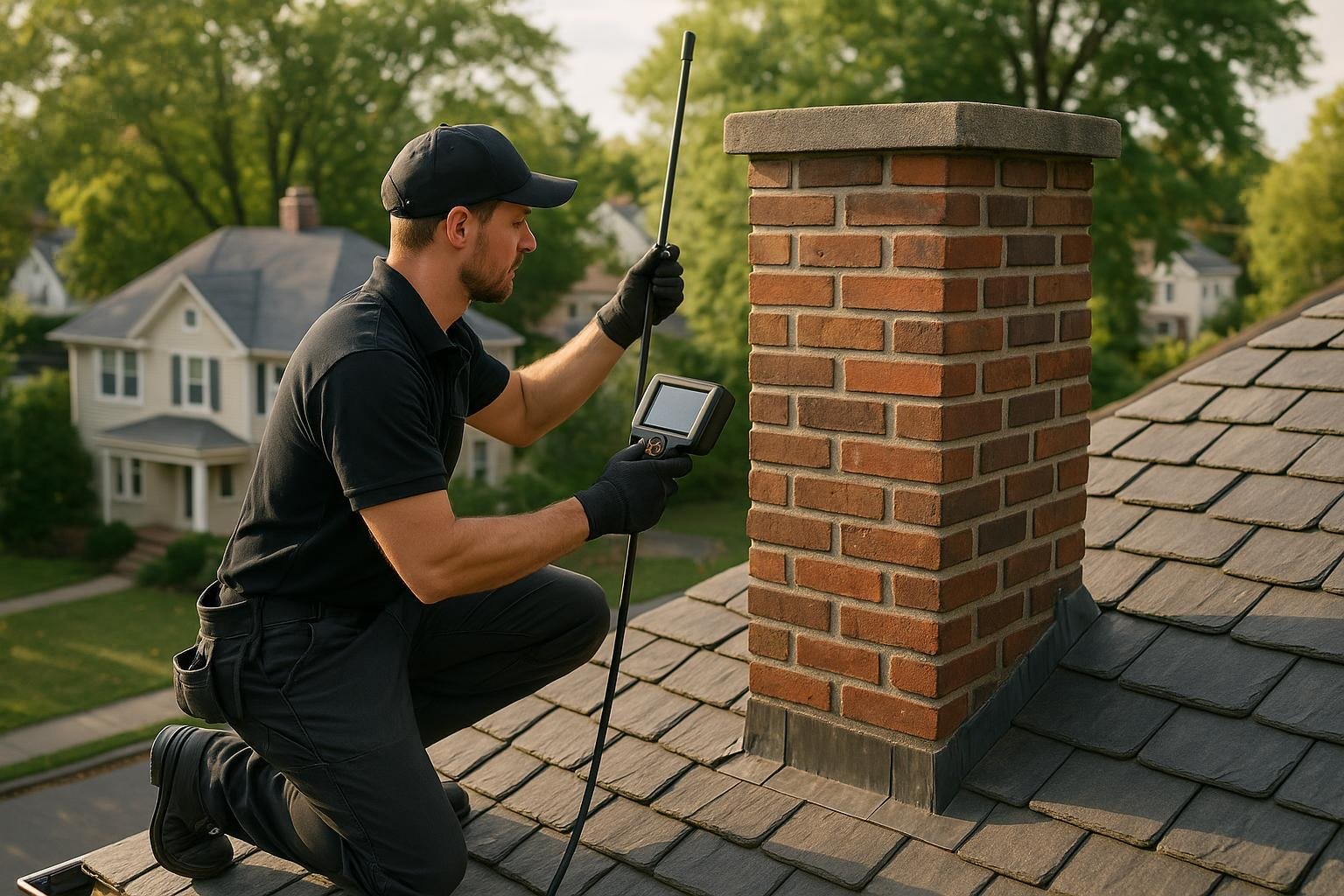
In most cases, the stainless steel liner is inserted inside the existing clay-tile flue without removing the tile. The liner runs from the appliance connector at the base to the top plate at the crown, and the annular space between the liner and the tile can be filled with a poured insulation mix (often called a pour-in-place system) for maximum thermal performance. Tile removal is only necessary when the tile has collapsed and is blocking the flue, or when the interior dimension of the tile has been reduced to the point where the required liner diameter cannot physically fit. We inspect with a video scan before every liner installation to confirm clearances and identify any obstructions before work begins.
Schedule Your Stainless Steel Chimney Liner Installation in Ridgewood
Ridgewood Chimney serves Ridgewood and surrounding Bergen County communities with licensed, fully insured chimney liner installations. Whether you are replacing a deteriorated clay-tile flue, upgrading for a new wood stove, or bringing an older oil-appliance venting system into current code compliance, we will measure, specify, and install the correct stainless steel liner system for your home — with permits, documentation, and a written warranty.
Call Ridgewood Chimney today or use our online contact form to request a free, no-obligation liner estimate. We schedule appointments six days a week and offer same-week availability for urgent safety situations. Do not run your heating appliance through another Bergen County winter on a cracked or missing liner — contact us now and get it done right.
Worth knowing
Bergen County winters are hard on masonry. Freeze–thaw cycles pry at every joint, and small cracks become expensive rebuilds when they are ignored. A yearly inspection is the cheap way to stay ahead of it.
Areas we serve
Ridgewood, NJ · Ridgewood, NJ · Ridgewood, NJ · Ridgewood, NJ · Ridgewood, NJ · Ridgewood, NJ · All areas →