Creosote Removal in Bergen County, NJ: Common Mistakes Ridgewood Homeowners Should Avoid
If you have been burning wood throughout the winter in Ridgewood or elsewhere in Bergen County, creosote has likely accumulated inside your chimney. The important questions are how much has accumulated, what type of buildup is present, and whether your chimney can be safely cleaned using standard sweeping methods or requires additional treatment.
Understanding how creosote forms and how it is removed can help you make informed decisions about chimney maintenance and reduce the risk of chimney fires.
Before You Schedule a Chimney Cleaning
Creosote forms as smoke cools inside the chimney and leaves combustible deposits on the flue walls.
These deposits are commonly described in three stages.
Stage 1 consists of loose, flaky soot and creosote that can usually be removed with standard chimney sweeping.
Stage 2 consists of denser, harder creosote deposits that often require specialized mechanical cleaning techniques.
Stage 3, commonly called glazed creosote, forms a hard, shiny coating that can be difficult to remove and may require specialized chemical products used together with mechanical cleaning methods.
Because all forms of creosote are combustible, routine chimney inspections and cleaning are important parts of fireplace maintenance.
A qualified chimney professional can determine the amount and type of creosote present before recommending the appropriate cleaning method.
Step 1: Schedule a Chimney Inspection
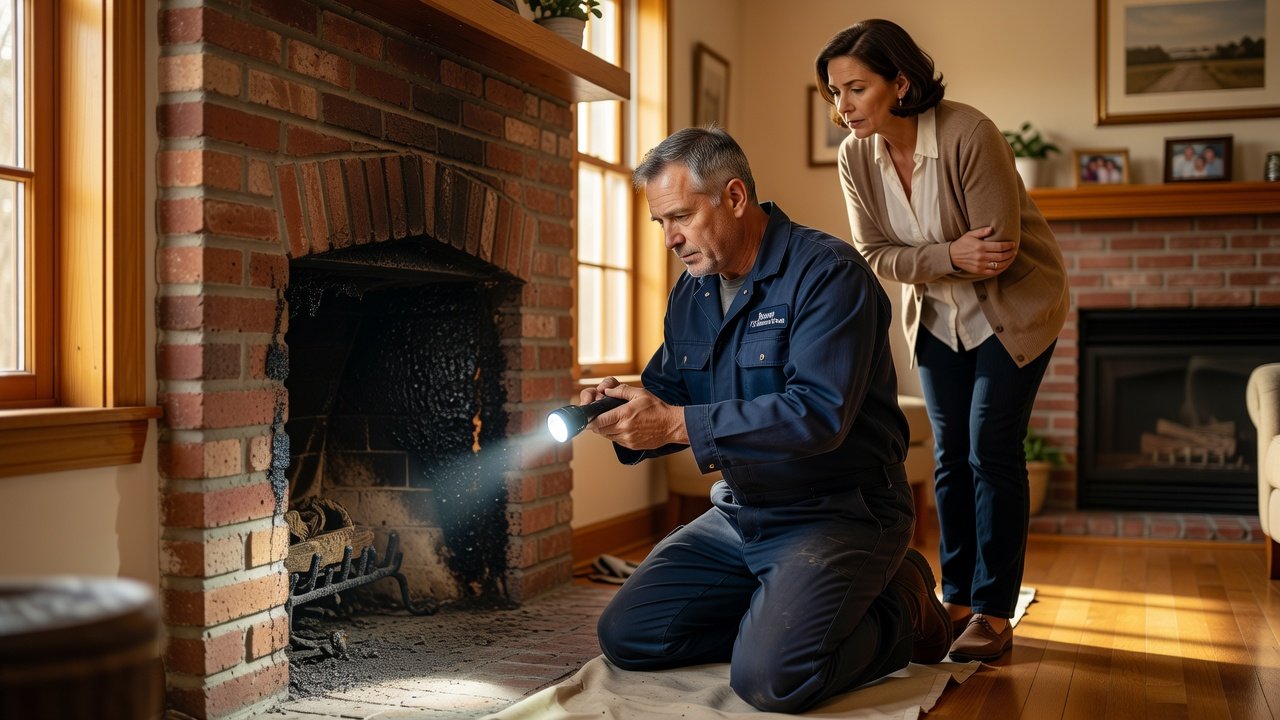
Before cleaning begins, the chimney should be inspected.
NFPA 211 recommends that chimneys, fireplaces, vents, and solid fuel burning appliances be inspected at least once each year.
A Level 1 inspection is appropriate for chimney systems that have not changed and are operating under normal conditions.
A Level 2 inspection may be recommended when required by NFPA 211, such as after a chimney fire, during the purchase of a home, after replacing a heating appliance, or whenever hidden damage is suspected.
An inspection helps identify the condition of the chimney liner, firebox, smoke chamber, chimney cap, and other accessible components before cleaning begins.
Step 2: Understand the Cleaning Process
Not every chimney requires the same cleaning method.
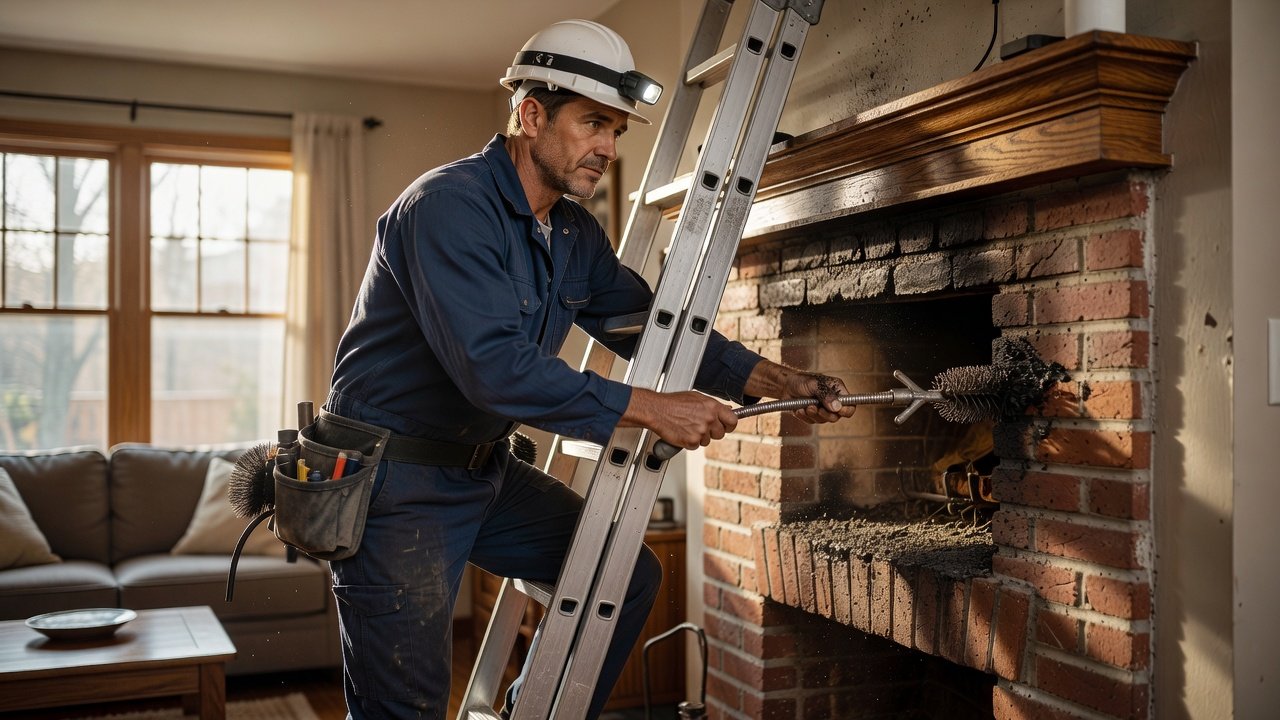
Loose Stage 1 creosote can often be removed using professional chimney brushes and rotary cleaning equipment.
Heavier Stage 2 deposits may require additional mechanical cleaning techniques.
Stage 3 glazed creosote is considerably more difficult to remove and may require specialized products together with mechanical cleaning equipment. In some cases, multiple treatments may be necessary depending on the amount of buildup.
The appropriate cleaning method depends on the condition of the chimney and should be determined during the inspection.
Step 3: Do Not Rely on Chimney Cleaning Logs Alone
Creosote modifying logs are sometimes marketed as products that help reduce creosote buildup.
These products may help loosen certain types of creosote deposits, but they do not replace professional chimney inspections or chimney sweeping.
If creosote accumulation is significant, a professional cleaning remains necessary to restore the chimney to a safe operating condition.
Step 4: Ask About Dust Containment
Professional chimney cleaning should include measures to help contain soot and creosote inside the work area.
Many chimney companies use drop cloths, protective barriers, and HEPA filtered vacuum systems to reduce the amount of dust released into the home during cleaning.
Asking how the company protects your home during service is an important part of choosing a qualified chimney professional.
Step 5: Inspect the Chimney After Heavy Creosote Removal
Removing heavy creosote deposits may expose chimney liner cracks, deteriorated mortar joints, or other conditions that were previously hidden.
Depending on the amount of buildup and the condition of the chimney, your technician may recommend additional inspection using camera equipment after cleaning has been completed.
If damage is identified, chimney liner repair or relining may be recommended before the fireplace is used again.
Step 6: Reduce Future Creosote Buildup
The type of firewood you burn has a significant effect on creosote accumulation.
Well-seasoned hardwood with a moisture content below approximately 20 percent generally burns more efficiently than freshly cut or unseasoned firewood.
Avoid burning household trash, cardboard, painted wood, pressure treated lumber, or other inappropriate materials because they can contribute to excessive deposits and damage the chimney.
Maintaining hotter, efficient fires rather than prolonged smoldering fires can also help reduce creosote formation.
Step 7: Schedule Annual Maintenance
Scheduling chimney service before the heating season begins allows time for any necessary repairs before regular fireplace use.
Late summer and early fall are often convenient times to schedule chimney inspections and cleanings before appointment availability becomes more limited.
NFPA 211 recommends annual chimney inspections, with chimney cleaning performed whenever creosote buildup or other conditions indicate it is necessary.
Troubleshooting Tip
If smoke enters the room after your chimney has been professionally cleaned, several factors may be responsible.
Cold chimney temperatures, restricted airflow, chimney cap obstructions, or draft problems can all affect fireplace performance.
If the problem continues after the chimney has been cleaned, contact your chimney professional for further evaluation before continuing to use the fireplace.
Schedule Your Chimney Inspection
Ridgewood Chimney proudly serves homeowners throughout Bergen County, including Ridgewood, Wyckoff, Glen Rock, Paramus, Fair Lawn, Mahwah, and surrounding communities.
Our experienced chimney technicians provide professional chimney inspections, chimney sweeping, detailed written evaluations, and honest recommendations based on the condition of your chimney system.
Contact Ridgewood Chimney today to schedule your chimney inspection or request an estimate.
Also on this site: What a Chimney Inspection in Ridgewood, NJ Actually Costs and What You
Also on this site: When to Hire a CSIA Certified Chimney Sweep in Midland Park and How to
Our services
Chimney Cap Installation in Ridgewood, NJ · Reliable Chimney Care in Orange · Reliable Chimney Care in Mission Viejo · Reliable Chimney Care in Los Alamitos · Reliable Chimney Care in Lake Forest · Reliable Chimney Care in Laguna Woods
Areas we serve
Ridgewood, NJ · Ridgewood, NJ · Ridgewood, NJ · Ridgewood, NJ · Ridgewood, NJ · Ridgewood, NJ · All areas →