🔑 Key Takeaway
Key Clinical & Policy Sources
- According to SAMHSA’s 2022 National Survey, approximately 22.8% of U.S. adults experienced mental illness in the past year.
- SAMHSA data shows only 46.2% of U.S. adults with mental illness received treatment in 2022.
- The CDC reports depression affects more than 21 million American adults annually.
Residents of Bergen County seeking creosote removal Bergen County NJ can access Medicaid-covered telehealth mental health services in 2026. Our clinical team is available to help navigate enrollment, provider selection, and ongoing care coordination.
Creosote Removal in Bergen County, NJ: What Every Homeowner Needs to Know Before Hiring Anyone
*A complete guide to understanding creosote, why removing it could save your home, and how to choose a chimney professional you can actually trust.*
—
If you’ve ever lit a fire in your fireplace and wondered what’s quietly building up inside your chimney walls — the answer is creosote, and it’s one of the most underestimated fire hazards in homes across Bergen County. Creosote removal is exactly what it sounds like: the professional cleaning process that strips away a thick, flammable byproduct of wood burning that coats the inside of your chimney flue over time. Left unchecked, it becomes the leading cause of chimney fires in New Jersey — and the difference between a safe winter and a devastating one often comes down to who you hire to remove it, and whether you hired them at all.
This guide will walk you through everything — what creosote actually is, how the removal process works, what to expect as a Bergen County homeowner, what it costs, and most importantly, how to tell the difference between a qualified chimney professional and someone who will take your money and leave your family at risk.
—
## What Is Creosote, Exactly?
Before we talk about removing it, let’s make sure we understand what we’re dealing with.
Every time you burn wood in your fireplace, the combustion process releases smoke, water vapor, gases, unburned wood particles, and volatile organic compounds. As this mixture rises up your chimney and encounters cooler air near the top of the flue, those compounds condense and stick to the interior walls of the chimney. That sticky residue is creosote.
Here’s the important part: **creosote is highly flammable**. The Chimney Safety Institute of America (CSIA), the national authority on chimney safety, identifies creosote accumulation as the primary cause of chimney fires in the United States. According to the National Fire Protection Association (NFPA), there are approximately 25,000 chimney fires annually in this country — and the vast majority involve creosote ignition.
Creosote doesn’t just appear in one form. It actually progresses through three distinct stages, each more dangerous and more difficult to remove than the last:
**Stage 1 — Dusty or Flaky Creosote:** This is the lightest, earliest form. It looks like gray or black soot and feels powdery. It’s the easiest to remove and what you’ll find in a chimney that gets regular professional cleanings. Standard chimney brushes handle this form effectively.
**Stage 2 — Tar-Like or Crunchy Creosote:** At this stage, creosote has hardened into shiny, black, brittle flakes or a tar-like coating. It takes more specialized tools to remove and signals that cleaning intervals have been stretched too long.
**Stage 3 — Glazed Creosote:** This is the most dangerous and most expensive problem to deal with. Stage 3 creosote is a dense, hardened, glass-like coating that adheres tightly to flue walls. It’s nearly impervious to standard brushing and requires chemical treatments, specialized rotary tools, and multiple service visits to fully address. It is also the most combustible form — a Stage 3 chimney fire burns at temperatures that can crack flue liners, warp dampers, and structurally compromise the entire chimney system.
—
## Why Bergen County Homeowners Face Particular Risk
Homeowners throughout Bergen County — from Ridgewood and Wyckoff to Paramus, Glen Rock, Mahwah, and Ramsey — rely heavily on fireplaces and wood-burning stoves during New Jersey winters. This region’s cold season is long and genuinely cold, and the appeal of a wood fire is understandable. But Bergen County’s housing stock also includes a significant number of older homes — many built in the mid-20th century or earlier — with chimneys that haven’t been properly maintained, inspected, or updated in years.
In communities like Ho-Ho-Kus, Allendale, and Waldwick, it’s common to find homes with original terra cotta flue liners that are decades old, chimneys that have been used extensively but cleaned infrequently, and fireplaces that have been dormant for years and then suddenly restarted without an inspection. All of these scenarios accelerate creosote accumulation and elevate the risk of a chimney fire or dangerous carbon monoxide intrusion into the home.
The NFPA’s Standard 211 — the industry benchmark for chimney inspection and cleaning — is clear: chimneys should be inspected at least annually and cleaned as often as necessary to prevent hazardous buildup. In Bergen County’s climate, where fireplaces are in active use from October through March, that often means professional cleaning once per season, or more frequently for high-volume burners.
—
## How Creosote Removal Actually Works: A Step-by-Step Breakdown
Many homeowners imagine chimney cleaning as a quick sweep with a brush and a dustpan. Professional creosote removal — done correctly — is considerably more involved than that. Here’s what a qualified service visit should actually look like.
### Step 1: Pre-Service Inspection
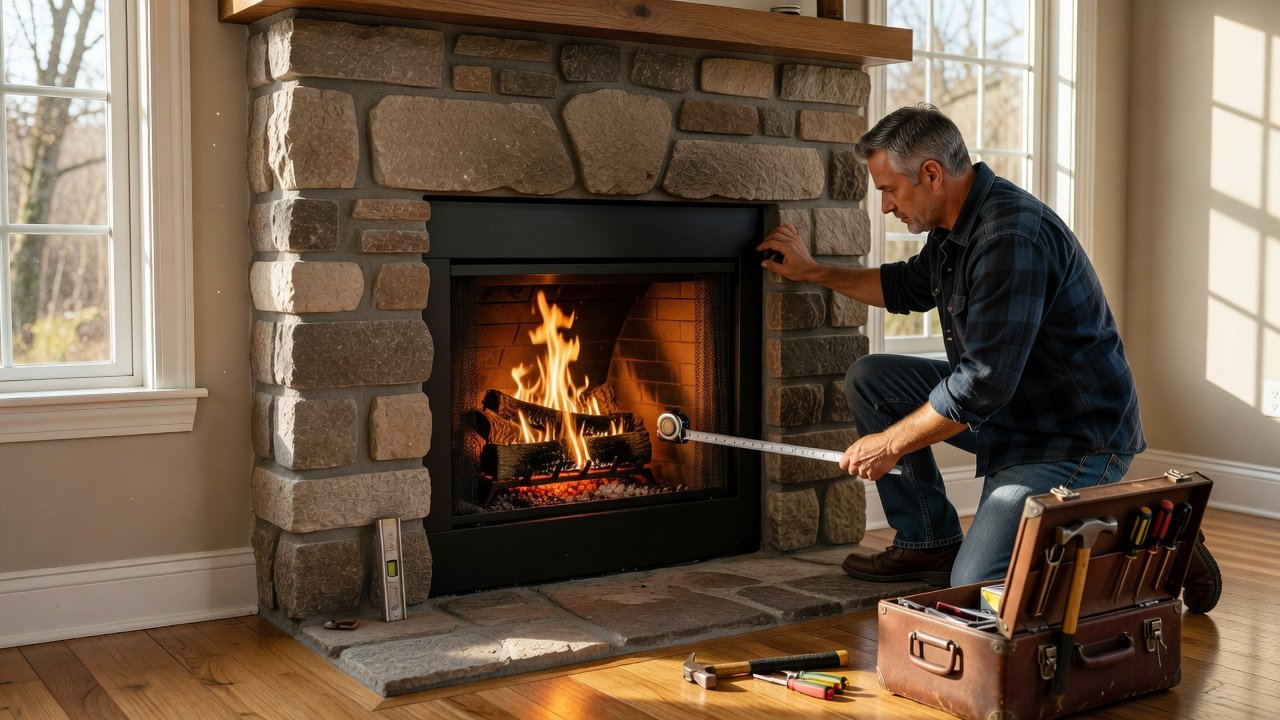
A reputable chimney professional doesn’t just start sweeping. They begin with a visual inspection of your fireplace, firebox, damper, smoke chamber, and chimney exterior. This tells them what type and stage of creosote they’re dealing with before they choose their tools and approach.
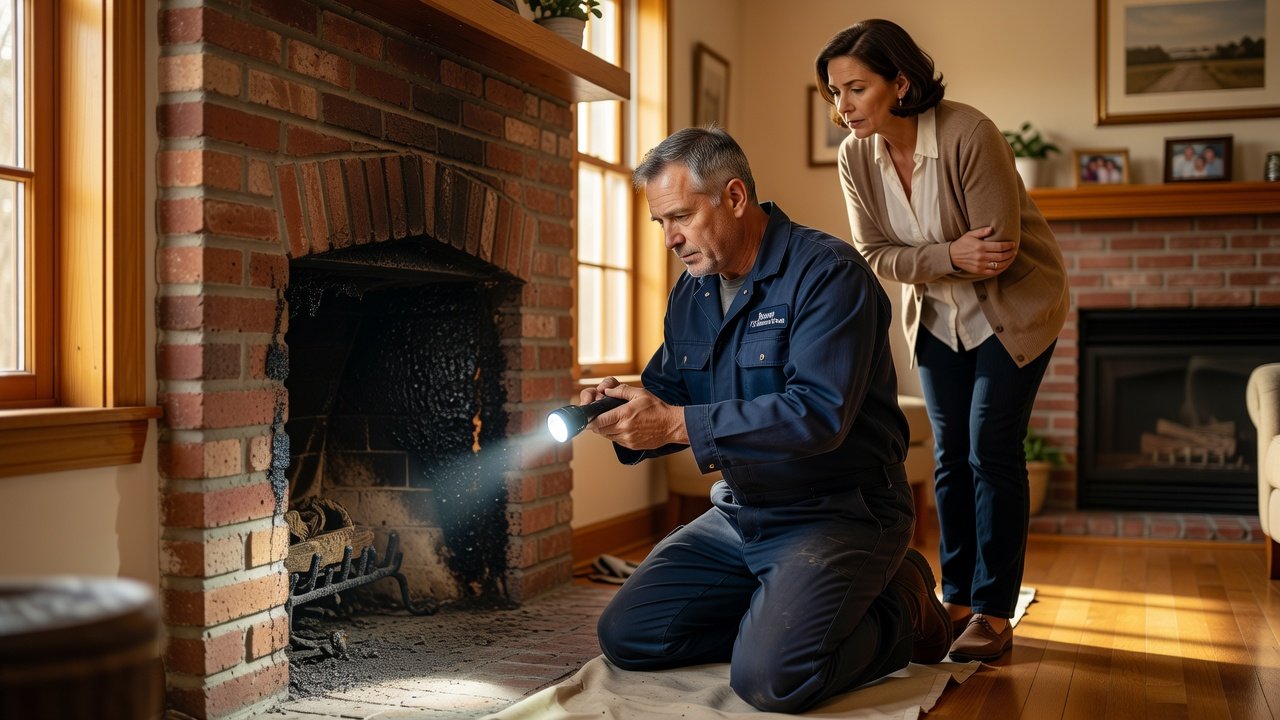
For a thorough inspection, a CSIA-certified chimney sweep will often use a high-definition camera system to view the inside of the flue — a process called a **Level 2 inspection**. The NFPA and CSIA recommend Level 2 inspections when a property changes hands, after any significant chimney event (like a fire or severe storm), or when the homeowner is unsure of the chimney’s condition. For homeowners in Ridgewood, Franklin Lakes, or Saddle River who haven’t had their chimney looked at in several years, this is the appropriate starting point.
### Step 2: Protecting Your Home
Before any cleaning begins, your technician should lay protective drop cloths around your fireplace and hearth area and seal the fireplace opening with a dust-containment barrier. Chimney cleaning — even when done well — generates significant dust and debris. If a company skips this step, your living room will look like it survived a volcanic event.
### Step 3: Mechanical Brushing
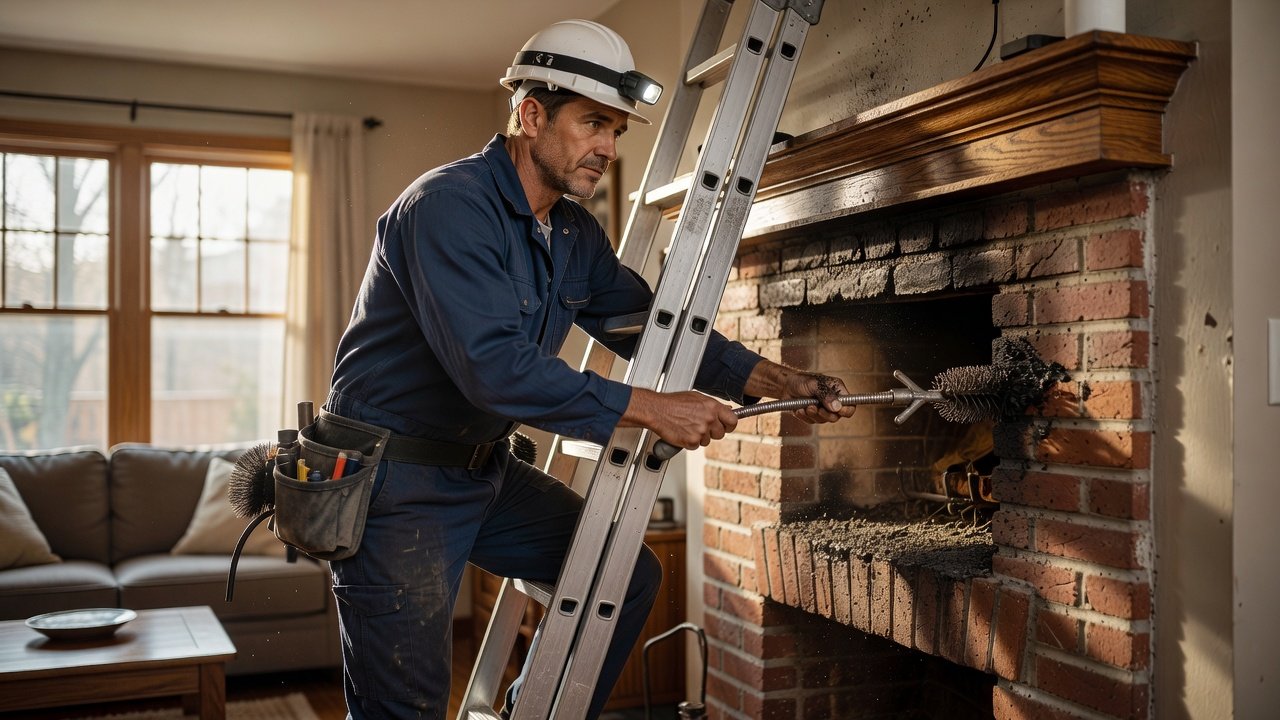
For Stage 1 and mild Stage 2 creosote, the primary tool is a rotary or manual chimney brush attached to flexible rods. The sweep works from the top down (or bottom up, depending on their approach), scrubbing the flue walls to dislodge accumulated creosote and debris. Modern professional equipment uses high-powered industrial vacuums with HEPA filtration to capture dust and particles as they fall — this is non-negotiable for a quality service.
### Step 4: Chemical Treatment (For Stage 2 and Stage 3)
This is where good chimney companies separate themselves from the rest. Stage 2 creosote that has hardened, and especially Stage 3 glazed creosote, cannot be effectively removed with brushes alone. Qualified professionals apply specialized chemical treatments — compounds like **ACS (Anti-Creo-Soot)** or **POULTICE creosote remover** — that break down the molecular structure of hardened deposits, making them brittle enough to be brushed out or, in the case of Stage 3, converted into a form that can be safely managed.
Stage 3 removal is not a one-visit job. Be very cautious of any company that claims they can fully resolve glazed Stage 3 creosote in a single standard cleaning appointment. It typically requires multiple visits with chemical pre-treatment and progressive mechanical removal.
### Step 5: Final Inspection and Documentation
After cleaning, your technician should do a post-cleaning inspection and be able to show you before-and-after photos from the camera system. They should provide you with a written report of the chimney’s condition, any damage observed (cracked tiles, deteriorating mortar, damaged dampers), and recommended next steps. You should walk away with documentation — not just a verbal summary.
—
## Choosing a Creosote Removal Provider: What Separates Good from Bad
This is the most important section of this entire guide. In Bergen County, as in any market, the range of quality among chimney service companies is enormous. On one end, you have CSIA-certified, experienced professionals who operate with transparency, proper equipment, and genuine commitment to your safety. On the other end — and this is a real problem in the NJ market — you have unlicensed operators, seasonal workers with minimal training, and companies that use high-pressure sales tactics to charge homeowners for unnecessary repairs.
Here’s exactly what to look for and watch out for.
### ✅ Green Flags: Signs of a Trustworthy Provider
**CSIA Certification**
The Chimney Safety Institute of America is the gold standard for professional credentials in this industry. A CSIA-certified chimney sweep has passed rigorous written examinations covering chimney systems, safety standards, fuel types, and applicable codes. This certification requires ongoing education to maintain. Every technician working on your chimney should be able to provide their CSIA certification number, which you can verify directly on the CSIA website. Do not hire anyone who cannot demonstrate current CSIA certification.
**Membership in the National Chimney Sweep Guild (NCSG)**
The NCSG is the professional trade association for chimney service companies. Membership indicates a commitment to professional standards, continuing education, and ethical business practices.
**Proper Licensing and Insurance in New Jersey**
In NJ, chimney contractors performing repair work should carry appropriate contractor licensing. All companies should carry general liability insurance AND workers’ compensation insurance. Ask for certificates of insurance before anyone climbs on your roof. If a worker is injured on your property and the company doesn’t carry workers’ comp, you could be held liable. This is not a detail to overlook.
**Transparent, Itemized Pricing**
A reputable company gives you a clear, written estimate before work begins. They explain what’s included in a standard cleaning, what would trigger additional charges, and why. If someone quotes you a very low flat price over the phone without asking any questions about your chimney, be skeptical — it’s often a bait-and-switch tactic.
**High-Definition Camera Inspections**
Any company worth hiring uses video inspection equipment. You should be able to see inside your own chimney. If a technician tells you about serious damage but can’t show you photographic or video evidence, ask why — or find someone else.
**Clear Written Reports**
After every service visit, you should receive a written report. This protects you, documents your chimney’s maintenance history, and is often required when you sell your home or file a homeowner’s insurance claim.
**Good Local Reviews with Specific Detail**
Look for Google reviews that mention specific technicians by name, describe the work performed, and reference local towns in Bergen County. Generic five-star reviews without substance are much less meaningful than detailed accounts from homeowners in Ridgewood, Mahwah, or Westwood who describe exactly what was done and why they trust the company.
—
### 🚩 Red Flags: Warning Signs to Walk Away From
**The “$49 Special” or Suspiciously Low Advertised Price**
This is one of the most common schemes in the chimney industry, and Bergen County homeowners encounter it regularly. A company advertises a very low cleaning special — sometimes as low as $49 or $69 — gets inside your home, and then immediately identifies thousands of dollars in “critical” repairs that need to happen right now. Sometimes those repairs are real. Often they are not. A legitimate cleaning by a CSIA-certified sweep using proper equipment costs more than $49. If someone is offering to do it for that, ask very hard questions about what’s actually included.
**High-Pressure Tactics and Same-Day Urgency**
Phrases like “You can’t use your fireplace until this is fixed” or “This is a fire hazard that needs to be addressed today” are sometimes legitimate — but they’re also frequently used to pressure homeowners into authorizing expensive repairs on the spot without time to get a second opinion. A trustworthy company will always give you written documentation of any issue found and allow you time to make a decision without pressure.
**No Physical Business Address or Verifiable NJ Presence**
Some seasonal or fly-by-night operators work out of unmarked vans without a real business address. If you can’t find a physical location, a consistent business history, or a verifiable presence in Bergen County, keep looking.
**Technicians Who Can’t Answer Basic Questions**
Ask your technician what stage of creosote they found, what their cleaning process involves, and what standards they follow. A trained professional will answer these questions clearly and specifically. Vague answers like “it was dirty, we cleaned it” are a sign you may not be working with someone who truly knows what they’re doing.
**No Camera, No Documentation**
If the technician comes in, does a quick sweep, collects payment, and leaves without showing you any evidence of what was found or done — that’s a problem. You should never be asked to take someone’s word for the condition of your own chimney.
—
## Common Misconceptions About Creosote Removal
Let’s clear up some of the most persistent myths that lead Bergen County homeowners to make costly — and sometimes dangerous — mistakes.
### Myth #1: “I Only Burn Dry Wood, So I Don’t Have a Creosote Problem”
**Reality:** Burning properly seasoned hardwood absolutely produces less creosote than burning wet or green wood — that’s true. But no wood-burning fire produces zero creosote. Every fire generates some degree of buildup. The NFPA’s Standard 211 recommends annual inspection regardless of fuel quality or burning frequency. Burning dry wood reduces the rate of buildup; it doesn’t eliminate the need for professional cleaning.
### Myth #2: “My Chimney Looks Fine, So It Probably Is”
**Reality:** You cannot assess the condition of your chimney from the fireplace opening or from the ground outside. Creosote accumulation, cracked flue tiles, deteriorating mortar joints, and structural damage are hidden inside the flue system, which extends anywhere from 15 to 30+ feet above the firebox. The only way to actually know your chimney’s condition is through a camera-assisted inspection by a CSIA-certified professional.
### Myth #3: “Chimney Cleaning Logs Are an Adequate Substitute for Professional Cleaning”
**Reality:** Chimney cleaning logs — the commercially available logs that claim to reduce creosote — can be a useful supplemental tool for Stage 1 creosote maintenance between professional cleanings. They are not a substitute for professional cleaning. The CSIA is explicit on this point. These products do not remove creosote from your chimney; they chemically alter light deposits to make them somewhat more brittle. They have no meaningful effect on Stage 2 or Stage 3 creosote and do not replace mechanical cleaning.
### Myth #4: “I Haven’t Used My Fireplace in Years, So There’s Nothing to Worry About”
**Reality:** A dormant fireplace actually presents its own set of risks. Chimneys that haven’t been used in years are prime real estate for animal nesting (birds, squirrels, and raccoons are common in Bergen County), moisture damage, and blockages — all of which create serious fire and carbon monoxide hazards when the fireplace is eventually restarted. Before lighting that first fire in a long-dormant fireplace, you need a professional inspection, not just a quick visual check.
### Myth #5: “All Chimney Companies Are Basically the Same”
**Reality:** This guide has spent considerable space explaining why this is false — and it’s the most important myth to dispel. Certification, training, equipment, and ethics vary enormously in this industry. The difference between a qualified CSIA-certified professional and an unlicensed operator isn’t just about quality — it’s about whether your family is actually safe.
—
## What Does Creosote Removal Cost in Bergen County?
Let’s talk about realistic pricing so you can evaluate quotes with informed expectations.
A standard **Level 1 chimney inspection and cleaning** — appropriate for a fireplace that has been maintained regularly with no known issues — typically ranges from **$150 to $300** in Bergen County. This covers a visual inspection, mechanical brushing of the flue, and basic cleaning of the firebox and smoke chamber.
A **Level 2 inspection with video camera** adds to that cost, typically ranging from **$250 to $450** depending on the company and the extent of the inspection. For homeowners who haven’t had their chimney looked at in several years, or who are buying or selling a home, this is money very well spent.
**Stage 2 or Stage 3 creosote removal** involving chemical treatments and multiple visits can range considerably — from **$400 to $1,000 or more** depending on the severity of the buildup, the height and accessibility of the chimney, and the number of service visits required. This is not the company trying to upsell you; this is what thorough remediation of a seriously neglected chimney genuinely costs.
If **flue liner repair or replacement** is identified, that’s a separate conversation and a separate line item. Stainless steel liner installation in Bergen County typically runs **$1,500 to $4,500** depending on the flue length and complexity. Get multiple quotes from CSIA-certified companies before committing to major repair work.
A note on pricing: the lowest bid is not always — or even usually — the best value. When the service in question is protecting your family from house fires and carbon monoxide poisoning, the cheapest option is rarely the one that will give you genuine peace of mind.
—
## Your Next Steps: Don’t Wait Until There’s a Problem
Chimney fires don’t announce themselves in advance. They don’t wait until it’s convenient. In towns across Bergen County — Ridgewood, Paramus, Fair Lawn, Upper Saddle River, Teaneck, and beyond — families are using their fireplaces tonight without any idea of the condition of the chimney above them.
The good news is that creosote removal and chimney inspection is not complicated, not extraordinarily expensive, and not time-consuming when handled by a qualified professional. The NFPA and CSIA recommend annual inspections. If it’s been more than a year — or if you genuinely can’t remember the last time your chimney was professionally cleaned — now is the time.
—
## Schedule Your Free Chimney Inspection with Ridgewood Chimney
At **Ridgewood Chimney**, we are CSIA-certified chimney professionals serving Bergen County homeowners throughout Ridgewood, Wyckoff, Mahwah, Glen Rock, Allendale, Waldwick, Ho-Ho-Kus, Ramsey, Paramus, Franklin Lakes, and surrounding communities. We believe every homeowner deserves honest answers, transparent pricing, and a clear picture of what’s happening inside their chimney system.
**We’re currently offering free chimney inspections** for Bergen County homeowners — no obligation, no pressure, no surprises. One of our certified technicians will inspect your chimney, show you exactly what we find with our camera system, and give you a written report you can keep.
**👉 [Schedule Your Thorough Inspection Today at RidgewoodChimney.com](#)**
Or call us directly to speak with a certified chimney professional who can answer your questions and get you on the schedule before the height of fireplace season.
Your fireplace should be a source of warmth and comfort — not a source of risk. Let us help you make sure it stays that way.
—
*Ridgewood Chimney serves Bergen County, NJ and surrounding communities. All technicians are CSIA certified. We follow NFPA 211 standards on every inspection and cleaning.*
Related: Telehealth Medicaid Therapy Services — learn how virtual sessions are covered under New York Medicaid.
Also on this site: What a Chimney Inspection in Ridgewood, NJ Actually Costs and What You
Also on this site: When to Hire a CSIA Certified Chimney Sweep in Midland Park and How to
Also on this site: Your Chimney Is Telling You It Needs Repair — Here’s How to Read the S
Our services
Reliable Chimney Care in Costa Mesa · Reliable Chimney Care in Anaheim · Reliable Chimney Care in Aliso Viejo · Chimney Repair in Ridgewood, NJ · Chimney Repair in Ridgewood, NJ · Chimney Repair in Ridgewood, NJ
Areas we serve
Ridgewood, NJ · Ridgewood, NJ · Ridgewood, NJ · Ridgewood, NJ · Ridgewood, NJ · Ridgewood, NJ · All areas →