How to Hire a Creosote Removal Contractor in Bergen County, NJ
Creosote buildup is an important chimney safety concern for homeowners who burn wood. This combustible residue forms during combustion and can accumulate inside the flue, increasing the risk of a chimney fire. If you use a fireplace or wood stove in Ridgewood, Ramsey, Westwood, or elsewhere in Bergen County, choosing a qualified chimney professional is an important part of routine maintenance. The right contractor should explain the chimney’s condition, recommend an appropriate cleaning method, and document any additional work that may be needed. This guide explains what to check before hiring a creosote removal contractor and how to compare estimates.
Before You Start: Understand Creosote Removal
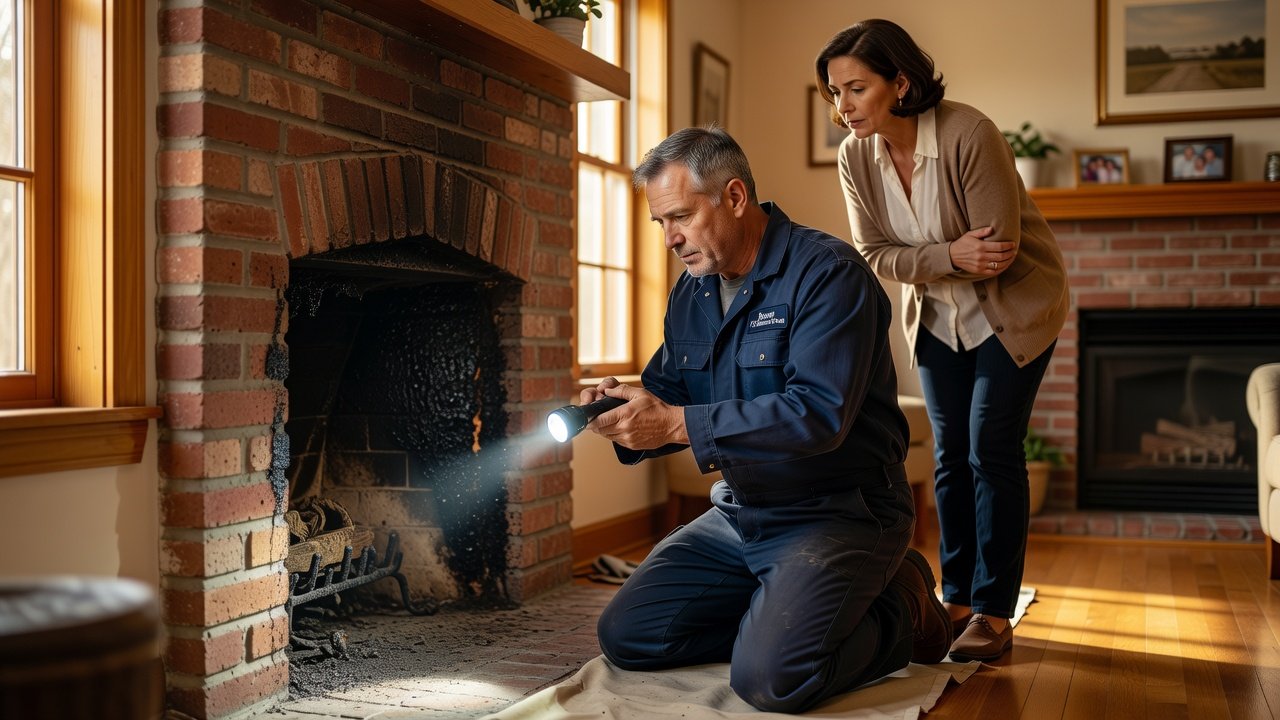
Creosote forms when products of wood combustion cool and condense inside the chimney. The amount and consistency of the deposits depend on factors such as the wood being burned, burning conditions, and how the appliance operates.
Deposits may be loose and flaky, sticky or tar-like, or hard and glazed. These differences affect how the chimney can be cleaned. Ordinary mechanical brushing may be suitable for some deposits, while hard or glazed creosote can require specialized treatment and additional mechanical removal.
The Chimney Safety Institute of America (CSIA) recommends annual chimney inspections, with cleaning and repairs performed when needed. Chemical cleaning products should not replace professional inspection or mechanical cleaning. A qualified professional can assess the deposits and explain which removal method is appropriate. <Cite refs={[“turn888403search7”]}/>
Before booking, ask whether the appointment includes an inspection, cleaning, and written findings. If you suspect a chimney fire has occurred, stop using the fireplace and arrange a professional assessment before using it again.
Step 1: Verify the Technician’s CSIA Certification
Ask whether the technician who will perform the work holds an active CSIA Certified Chimney Sweep credential. Do not rely solely on a company’s general statement that its staff are trained or certified.
You can learn about certification and chimney safety through the CSIA website. Ask who will be performing the inspection and cleaning, what qualifications that person holds, and whether the company has experience with the type of chimney in your home.
Additional training may be relevant when a property has a gas fireplace, wood stove, or other specialized appliance. Ask the contractor to explain which qualifications apply to your particular system.
Certification is a useful screening factor, but it does not guarantee the quality of every job. Also check the company’s insurance, written estimates, references, and willingness to explain its findings.
Step 2: Ask How the Contractor Handles Hard or Glazed Creosote
Not every chimney deposit can be removed with the same tools. If your chimney contains hard or glazed creosote, ask the contractor how the condition will be assessed and what cleaning method may be appropriate.
Depending on the deposit, a professional may use mechanical tools, specialized rotary equipment, or a chemical treatment designed to change the deposit’s properties before mechanical removal. Some situations may require more than one visit.
Chemical products alone are not a substitute for removing the resulting deposits and inspecting the chimney. The CSIA explains that qualified professionals may use certain chemical treatments alongside mechanical cleaning when deposits are particularly hard or tacky. <Cite refs={[“turn888403search7”]}/>
Ask these questions before authorizing work:
-
How will you assess the type and extent of the creosote?
-
What cleaning method do you recommend, and why?
-
Will the job require multiple visits?
-
Is any chemical treatment included in the estimate?
-
Will you inspect the flue after cleaning?
-
What happens if the inspection reveals liner damage?
Be cautious if a contractor recommends an expensive repair or complete liner replacement without explaining the evidence. A damaged liner may need repair or replacement, but the recommendation should be based on the actual condition of the chimney.
Step 3: Check New Jersey Business Requirements and Insurance
Before hiring a contractor for residential chimney work, verify the business’s current registration or licensing status with the appropriate New Jersey Division of Consumer Affairs office. State requirements have changed, so confirm which requirements apply to the specific business and work being proposed.
The state’s official Home Improvement Contractor Business website provides information about applicable requirements and business verification. <Cite refs={[“turn888403search1″,”turn888403search3″,”turn888403search8”]}/>
Also ask for proof of general liability insurance and workers’ compensation coverage where applicable. Confirm that the coverage is current and that the company can provide documentation.
For work involving repairs, relining, or construction, ask whether permits are required and who will obtain them. Requirements depend on the scope of work and applicable local rules.
Do not assume that a business is properly qualified simply because it has a website, advertises locally, or provides a low estimate.
Step 4: Get a Written, Itemized Estimate
A written estimate makes it easier to understand what you are paying for and compare proposals from different contractors.
Ask the estimate to identify:
-
Whether the service includes inspection, cleaning, or both.
-
The type and extent of creosote buildup found, if already assessed.
-
The proposed cleaning method and any specialized treatment.
-
Whether video scanning is included or recommended.
-
Any additional visits or charges that may apply.
-
Any liner damage or other repairs that are excluded from the cleaning price.
-
The expected scope of work and payment terms.
The price depends on the chimney configuration, access, amount and condition of the deposits, cleaning method, and whether additional services are necessary. A standard cleaning and a job involving difficult glazed deposits are not directly comparable.
Avoid relying on a generic price range as a guarantee of what your own chimney will cost. Request a quote based on your specific system and ask the contractor to explain any potential additional charges before work begins.
Step 5: Request Before-and-After Documentation
Ask whether the contractor can provide photographs or video when appropriate. Documentation may help you understand the condition of the flue before cleaning and what the technician found afterward.
A professional should be able to explain the work performed, any remaining concerns, and whether further evaluation is recommended. If the inspection identifies a cracked liner, deteriorating mortar, or another defect, ask for supporting evidence and a separate written repair estimate.
You can also ask for references from previous customers in Bergen County. References may help you evaluate communication, reliability, and the contractor’s approach to documenting work.
Photos alone do not establish that a chimney is safe, and a camera scan is not automatically required for every routine cleaning. The appropriate inspection level and documentation depend on the system and the circumstances.
Step 6: Watch for Warning Signs Before Hiring
Be cautious if a contractor:
-
Claims there is an emergency before inspecting the chimney.
-
Pressures you into approving an expensive repair immediately.
-
Refuses to explain the recommended cleaning method.
-
Cannot provide appropriate business information or proof of insurance.
-
Gives a vague estimate without identifying what is included.
-
Recommends full liner replacement without explaining the observed damage.
-
Promises that a chemical product alone will eliminate the need for professional cleaning.
A low advertised price does not automatically mean poor service, just as a high price does not guarantee quality. The important questions are whether the scope is clear, the contractor is appropriately qualified, and the recommendation is supported by the inspection findings.
New Jersey’s Division of Consumer Affairs advises homeowners to compare bids, check references, and verify contractor credentials before hiring. <Cite refs={[“turn888403search5”]}/>
Step 7: Confirm What Happens After Cleaning
Before the appointment, ask what documentation you will receive once the work is complete. A useful service record should describe the work performed and note any defects or recommendations identified during the visit.
If the technician finds liner damage or other conditions that may affect safe operation, ask whether the fireplace should remain out of service until the problem is assessed or repaired.
Keep the inspection and cleaning records for future appointments. They can help the next technician understand previous findings and identify changes over time.
The CSIA recommends annual inspections even when homeowners use chemical cleaning products, because deposits are not the only possible chimney hazard. Structural defects and other problems may not be apparent without a proper evaluation. <Cite refs={[“turn888403search7”]}/>
A Safety Note About Cleaning Equipment
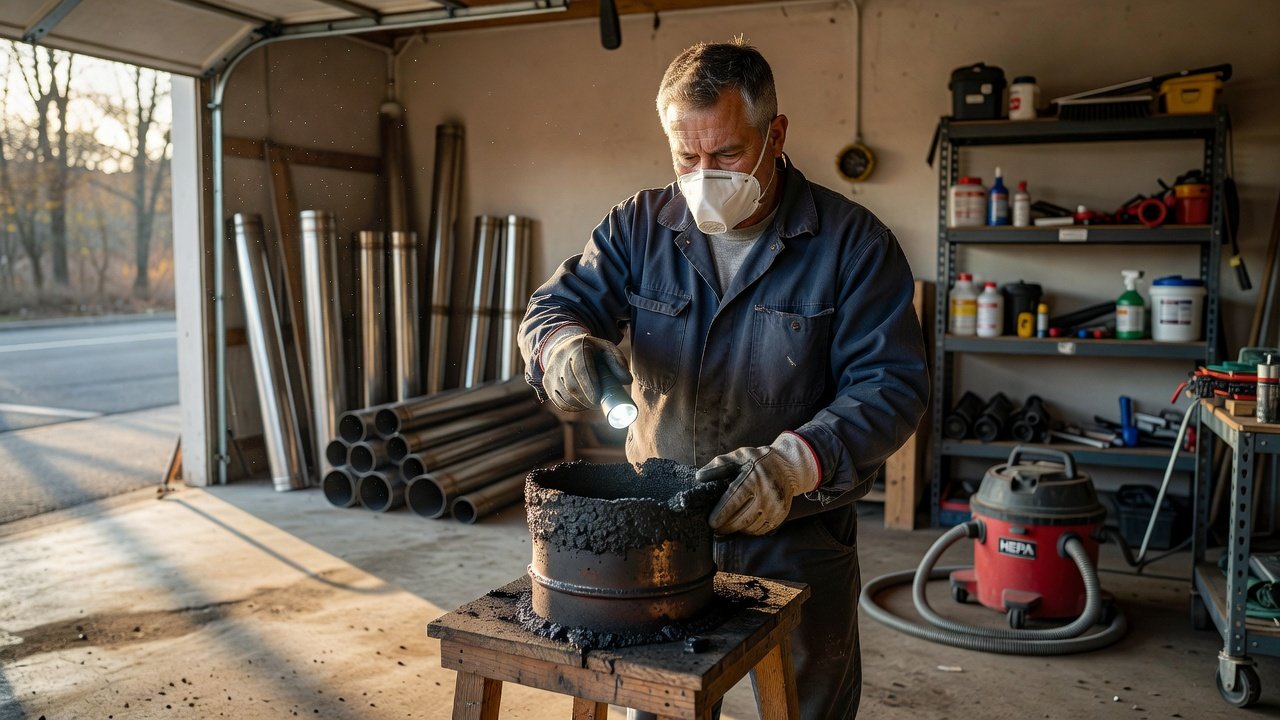
Professional chimney cleaning requires appropriate tools and methods to control soot and debris. Ask the contractor how the work area will be protected, how loosened deposits will be collected, and how the home will be cleaned after the job.
Do not assume that a particular vacuum rating alone proves whether a cleaning setup is suitable. Equipment needs depend on the job, the tools being used, and the manufacturer’s requirements. The contractor should be able to explain how the work will be performed while minimizing dust and debris in your home.
If the technician arrives without the equipment or protective measures described in the agreed scope, pause the job and ask for clarification before work continues.
Schedule Creosote Removal in Bergen County, NJ
If you burn wood regularly in Ridgewood, Ramsey, Westwood, or elsewhere in Bergen County, arrange an annual chimney inspection and have cleaning completed when necessary. If you notice heavy deposits, smoke entering the room, or evidence of possible chimney damage, seek professional advice rather than continuing to use the fireplace without an assessment.
Ridgewood Chimney is named as a potential local service provider in the original business brief. Before publishing a claim that it serves all of Bergen County, offers free inspections, or provides camera documentation, confirm those details directly with the company.
When comparing contractors, prioritize current credentials, appropriate insurance, a clear written estimate, and an explanation of the inspection findings. Those steps can help you choose a contractor based on the work your chimney actually needs.
Related from Ridgewood Chimney: How to Hire a CSIA Certified Chimney Sweep in Bergen County, NJ — With · Creosote Removal in Bergen County, NJ
Our services
Reliable Chimney Care in Laguna · Reliable Chimney Care in Irvine · Reliable Chimney Care in Huntington Beach · Reliable Chimney Care in Garden Grove · Reliable Chimney Care in Fountain Valley · Reliable Chimney Care in Fullerton
Areas we serve
Ridgewood, NJ · Ridgewood, NJ · Ridgewood, NJ · Ridgewood, NJ · Paramus, NJ · Ridgewood, NJ · Ridgewood, NJ · All areas →